
Every day, governments collect money through taxes, fees, and other sources and use it to provide services that people depend on. From public schools and hospitals to roads, public transport, and disaster relief, government financial decisions influence how communities’ function and develop.
So, what is public finance? Public finance is the branch of economics that studies how governments raise revenue, allocate public funds, manage debt, and use taxation and spending to influence the economy. It examines where public money comes from, how it is used, and how government financial decisions affect citizens, businesses, and society.
Public finance matters because government resources are limited, while public needs are extensive. Governments must decide how much money to collect, which services to prioritize, whether to borrow, and how to distribute resources among different communities. These decisions can influence employment, economic growth, income inequality, and the quality of essential services.
For example, investing in public education can help people develop skills, while spending on roads and transport can make it easier for businesses to move goods. At the same time, poorly planned spending or excessive borrowing can create financial pressure and reduce the money available for future priorities.
In this guide, you will learn the definition of public finance, its main components, functions, importance, scope, types, sources of revenue, and practical examples. You will also discover how public finance differs from private finance and why responsible management of public money matters.
es, economic stability, and social welfare while maintaining responsible financial management.
Definition of Public Finance in Economics

In economics, public finance is the branch that studies how government taxation, spending, borrowing, and financial administration influence the allocation of resources, the distribution of income, and economic stability.
Economists study public finance because markets do not always provide every good or service that society needs. Private businesses generally supply products and services in exchange for payment, but some services benefit large groups of people and are difficult to provide efficiently through ordinary market transactions.
For example, national defence and public street lighting have characteristics of public goods. It can be difficult to exclude non-payers from benefiting from them, and one person’s use may not significantly reduce the amount available to others. Governments therefore often finance these services collectively.
Markets can also produce outcomes that affect people who are not directly involved in a transaction. Pollution is one example. A factory may earn revenue from production while nearby communities bear some of the environmental costs. Economists call these effects externalities. Government policies, including taxes, regulations, and public investment, may help address such problems.
Public finance also examines how governments respond to inequality and differences in access to essential services. Taxation and public spending can redistribute resources and help provide education, healthcare, and social protection to people who might otherwise struggle to afford them.
Economists commonly distinguish between two approaches to studying public finance:
Positive public finance examines what happens when governments make financial decisions. For instance, researchers may investigate how an increase in sales tax affects consumer spending.
Normative public finance examines what governments should do according to economic or ethical objectives. For example, it may consider whether a tax system should place a greater burden on higher-income households or how limited funding should be divided between education and healthcare.
Together, these approaches help explain both the economic consequences of government decisions and the principles used to evaluate them.
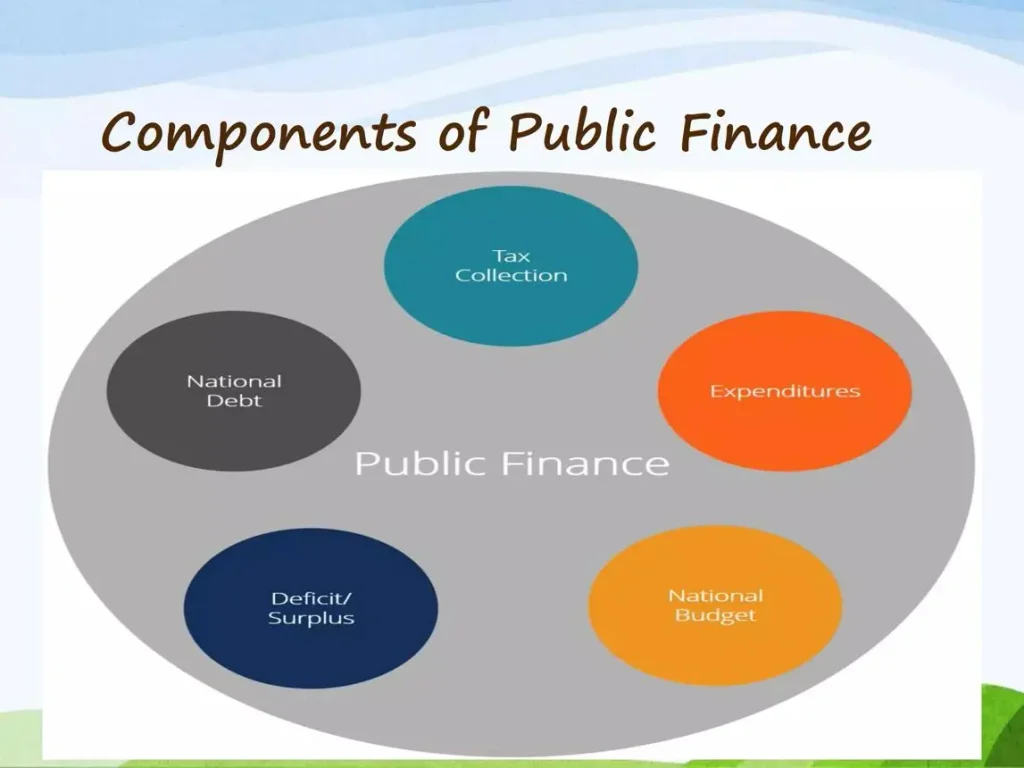
What Are the Main Components of Public Finance?
Public finance is commonly explained through four closely related components: public revenue, public expenditure, public debt, and fiscal policy. These concepts help describe how governments collect money, allocate resources, finance shortfalls, and influence economic activity.
1. Public Revenue
Public revenue is the money a government receives from taxes and other sources to finance its activities.
Taxes usually represent an important source of revenue. Depending on the country, these may include personal income tax, corporate income tax, sales tax, value-added tax, property tax, and customs duties.
Governments also collect non-tax revenue through licensing fees, fines, service charges, natural resource royalties, and earnings from state-owned enterprises. Some governments receive grants or financial transfers from other governments or international institutions.
Public revenue affects how much a government can spend without borrowing. When revenue collection is efficient and predictable, governments can plan public services and infrastructure projects more effectively.
For example, a government may use income tax receipts to help pay teachers’ salaries and fund public hospitals. Revenue from property taxes may help a local authority maintain streets, parks, drainage systems, and waste collection.
However, collecting revenue involves important choices. Taxes must be designed to raise sufficient funds while considering fairness, compliance costs, economic incentives, and the ability of households and businesses to pay.
2. Public Expenditure
Public expenditure is the money governments spend on public services, administration, infrastructure, transfers, and other approved purposes.
Government expenditure helps meet collective needs and supports the operation of public institutions. It can be divided into several categories.
Current expenditure covers recurring operating costs, such as public-sector salaries, medicines, utilities, pensions, and the routine operation of government offices.
Capital expenditure finances investments in long-lasting assets, including roads, bridges, schools, water systems, and power infrastructure.
Transfer payments provide financial support to individuals or organizations without the government receiving a directly equivalent good or service in return. Examples include certain pensions, unemployment benefits, and social assistance payments.
Governments must determine which spending priorities offer the greatest public benefit. A country may need to balance immediate needs, such as healthcare and food assistance, against long-term investments, such as transportation networks and education facilities.
Spending quality matters as much as spending levels. A large infrastructure budget does not automatically guarantee better roads if projects are poorly selected, delayed, or overpriced. Effective expenditure requires planning, transparent procurement, monitoring, and evaluation.
3. Public Debt
Public debt is the outstanding amount a government owes because of borrowing and other recognized debt obligations.
Governments may borrow when expenditure exceeds revenue, when they need to respond to an emergency, or when they want to finance major investments over time. Borrowing may take the form of government bonds, treasury bills, loans from financial institutions, or financing from international lenders.
A budget deficit occurs when government expenditure exceeds revenue over a particular period, according to the budget’s accounting definitions. A budget surplus occurs when revenue exceeds expenditure. Public debt is the accumulated stock of outstanding obligations, adjusted for repayments and other changes; it is not the same as a single year’s deficit.
Public debt can serve useful purposes. For example, borrowing to finance a carefully planned transport project may help spread the cost of an asset that benefits people over many years. Borrowing can also provide emergency funding after a natural disaster or during a severe economic downturn.
However, debt creates repayment obligations and interest costs. If debt grows faster than the government’s ability to service it, interest payments may absorb funds that could otherwise support education, healthcare, or infrastructure.
Economists therefore examine factors such as the debt-to-GDP ratio, interest costs, borrowing terms, revenue capacity, and the expected return on public investment when assessing debt sustainability.
Responsible debt management involves balancing present needs against future obligations and ensuring that borrowing risks remain manageable.
4. Fiscal Policy
Fiscal policy refers to how a government uses taxation and public expenditure to influence economic activity.
Governments may change taxes, spending, and transfers to support employment, stabilize demand, encourage investment, or address economic problems. Fiscal policy can operate automatically through existing tax and benefit systems or through deliberate changes to government policy.
Expansionary fiscal policy is generally intended to support economic activity. A government might increase infrastructure spending, expand temporary assistance, or reduce certain taxes during a downturn. These measures can support demand, although their effectiveness depends on economic conditions and how they are financed.
Contractionary fiscal policy is intended to restrain demand or reduce fiscal pressure. A government might reduce spending growth or increase taxes when demand is excessively strong or when it needs to improve its budget position. Such measures may help reduce demand-driven inflation, but they do not directly resolve every cause of rising prices, such as supply disruptions.
Fiscal policy differs from monetary policy. Fiscal policy is primarily determined by the government through taxation and spending decisions, while monetary policy is generally conducted by a country’s central bank through tools such as interest rates and liquidity management.
The International Monetary Fund’s explanation of fiscal policy provides additional background on how taxation and government spending influence economic activity.
What Are the Main Functions of Public Finance?
Public finance helps governments address market limitations, influence the distribution of income, and maintain economic stability. Economist Richard Musgrave’s classic framework identifies three core functions: allocation, distribution, and stabilization. Economic growth is also an important objective influenced by many public finance decisions.
1. Resource Allocation
The allocation function concerns how public resources are divided among different goods, services, and priorities.
Markets can supply many products efficiently, but they may undersupply public goods or fail to account for certain social costs and benefits. Governments use public finance to support services and investments where collective funding or intervention may be justified.
For example, a government may finance street lighting, flood barriers, public parks, or disease surveillance because the benefits extend beyond individual purchasers.
Resource allocation also involves difficult choices. A government with limited revenue may need to decide how much to spend on hospitals, schools, public transport, defenes, and environmental protection.
Good allocation requires assessing public needs, comparing costs and benefits, and directing resources toward programs that provide meaningful results.
2. Distribution of Income and Wealth
The distribution function examines how government revenue and expenditure affect the distribution of income, wealth, and economic opportunity.
Income differences arise for many reasons, including education, employment opportunities, ownership of assets, and economic conditions. Public finance can influence these differences through taxation, social assistance, pensions, and publicly funded services.
For example, a progressive income tax system generally applies higher tax rates to higher portions of taxable income. Governments may use some of the resulting revenue to support schools, healthcare, housing assistance, or programs for low-income households.
These policies can improve access to essential services and reduce poverty. Their effects depend on how taxes are structured, who ultimately bears their costs, how benefits are distributed, and how effectively programs operate.
The aim is not necessarily to make everyone earn the same amount. Rather, distributional policies often seek to improve fairness, reduce severe hardship, and widen access to opportunities.
3. Economic Stabilization
The stabilization function concerns the use of fiscal policy to reduce harmful economic fluctuations and support a more stable level of economic activity.
During a recession, businesses may reduce production, unemployment may rise, and households may cut spending. Governments can respond by allowing existing support systems to operate, increasing selected expenditures, or introducing temporary tax relief where appropriate.
When economic demand is excessively strong, policymakers may instead restrain spending growth or increase taxes to reduce fiscal pressure and help cool demand.
These measures require careful judgment. Fiscal policy works with delays, and its effects depend on household behaviour, business confidence, monetary policy, public debt, and the broader economic environment.
Stabilization does not mean eliminating every economic fluctuation. It means reducing the severity of downturns and avoiding policies that unnecessarily amplify economic instability.
4. Supporting Long-Term Economic Growth
Although growth is not a separate function in Musgrave’s original three-part framework, public finance can strongly influence a country’s long-term productive capacity.
Governments invest in infrastructure, education, healthcare, research, and institutions that help people and businesses operate more effectively.
For example, reliable roads can reduce transport costs, while education and vocational training can improve workers’ skills. Public investment in clean water and disease prevention can also improve health and productivity.
However, spending alone does not guarantee growth. Projects need sound planning, adequate maintenance, effective implementation, and a reasonable assessment of their economic and social benefits.
The World Bank’s overview of fiscal policy and growth explains how revenue collection, public spending, and fiscal management relate to development and economic stability.
Why Is Public Finance Important?
Public finance is important because it determines how governments fund essential services, respond to public needs, and manage financial resources. Its effects reach households, businesses, communities, and future generations.
1. It Funds Essential Public Services
Schools, hospitals, public safety services, courts, sanitation systems, and other public institutions require reliable funding.
Public finance helps governments plan the resources needed to operate these services and maintain their facilities. Without adequate funding and effective management, service quality can decline, staff shortages may increase, and access may become more difficult.
For example, a well-planned healthcare budget can help fund medical staff, equipment, medicines, and preventive care.
2. It Supports Infrastructure Development
Roads, bridges, water networks, ports, public transport systems, and electricity infrastructure can require substantial investment.
Public finance enables governments to evaluate, fund, and maintain projects that support economic activity and improve access to services. Well-designed infrastructure can reduce transport costs, connect communities to markets, and help businesses reach customers.
However, infrastructure spending should be based on public need, project quality, affordability, and long-term maintenance requirements.
3. It Can Reduce Poverty and Inequality
Governments can use tax and spending policies to support disadvantaged groups and improve access to opportunities.
Examples include targeted cash assistance, social pensions, public education, affordable healthcare, and support for people affected by unemployment or disability.
The effectiveness of these programs depends on accurate eligibility rules, adequate funding, effective delivery, and appropriate oversight. Poorly designed programs may fail to reach those who need assistance or create unnecessary administrative costs.
4. It Influences Economic Stability
Taxation and government spending affect total demand in the economy. During a downturn, public spending and benefit systems may help support household incomes and economic activity.
During periods of excessive demand, fiscal measures may help reduce inflationary pressure. The appropriate response depends on the cause of the economic problem and the country’s fiscal position.
Sound public finance can also help governments prepare for emergencies and avoid sudden, disruptive cuts to essential services.
5. It Creates Conditions for Business Activity
Businesses depend on infrastructure, a skilled workforce, predictable rules, functioning public institutions, and economic stability.
Government spending on transport, education, digital infrastructure, and public health can support productivity and investment. Tax policy also affects business costs, incentives, and decisions about hiring or expansion.
At the same time, poorly designed taxes, excessive administrative burdens, or unsustainable public borrowing can create challenges for private investment. The effects depend on policy design and the wider economic environment.
6. It Promotes Transparency and Accountability
Public revenue is collected under legal authority and is intended to finance public responsibilities. Citizens therefore have an interest in knowing how funds are collected, allocated, and spent.
Budgets, public accounts, procurement rules, audits, and legislative oversight help reveal how public money is used. Transparent reporting can also make it easier to identify waste, financial irregularities, and programs that fail to achieve their objectives.
Accountability does not depend on publishing figures alone. Information must also be understandable, timely, and connected to meaningful oversight.
7. It Protects Long-Term Financial Sustainability
Governments must consider how today’s spending and borrowing decisions affect future budgets.
High debt-servicing costs can limit future spending options, especially when revenue growth is weak or borrowing becomes more expensive. Long-term planning helps governments prepare for demographic changes, infrastructure maintenance, economic shocks, and future public obligations.
Sustainable public finance aims to meet current needs without creating financial commitments that become unmanageable over time.
What Is the Scope of Public Finance?
The scope of public finance includes the main financial activities of government and the economic effects of public revenue, expenditure, borrowing, and fiscal decisions.
Public Revenue
This area studies how governments raise money, including the design of tax systems, the administration of revenue collection, and the effects of taxes on households and businesses.
It considers questions such as whether a tax is fair, how efficiently it can be collected, and how it may influence saving, spending, employment, and investment.
Public Expenditure
Public expenditure examines how governments plan and allocates funds across services, programs, and investment projects.
It also considers whether spending achieves its intended goals, whether costs are reasonable, and whether resources could be used more effectively elsewhere.
Public Debt
Public debt analysis considers why governments borrow, which financing options they use, how debt is repaid, and whether future obligations are sustainable.
It also examines the risks created by interest-rate changes, currency movements, refinancing needs, and unexpected economic shocks.
Budgeting and Financial Administration
Government budgeting involves estimating revenue, setting spending priorities, obtaining legislative approval, and monitoring implementation.
Financial administration includes the processes used to manage funds, maintain records, make payments, monitor procurement, report results, and audit public accounts.
The World Bank’s discussion of public financial management provides further information on why effective management and oversight matter for delivering public services.
Fiscal Policy
This area studies how taxes, spending, transfers, and borrowing affect economic activity, employment, inflationary pressures, and the government’s financial position.
It also considers how policies should respond to recessions, economic overheating, natural disasters, and longer-term development needs.
Fiscal Federalism
Fiscal federalism examines how financial responsibilities and resources are divided among different levels of government.
In countries with federal systems, national, provincial or state, and local governments may have different responsibilities for taxation, education, healthcare, transport, and other services.
Transfers between levels of government can help finance services in areas where local revenue is insufficient or where national policy objectives require coordination.
Economic and Social Effects of Public Policy
Public finance also examines who benefits from public spending and who ultimately bears the burden of taxes.
For instance, a tax legally charged to a business may partly be reflected in prices paid by consumers, depending on market conditions. Similarly, a public subsidy may benefit producers, consumers, or both.
Understanding these effects helps policymakers evaluate efficiency, fairness, and the broader consequences of financial decisions.
What Are the Types of Public Finance?
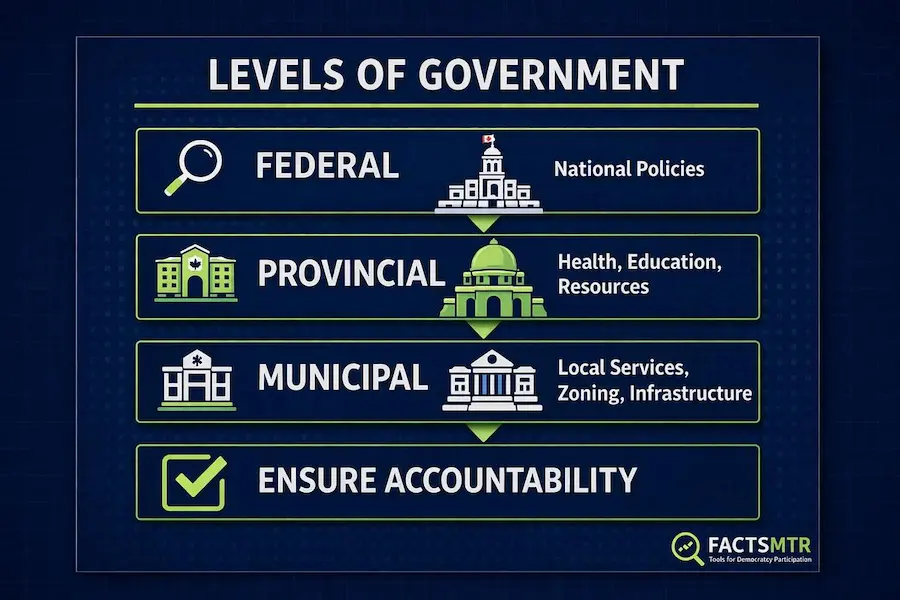
Public finance can be classified according to the level of government responsible for raising revenue and providing services. The precise arrangements vary from country to country.
1. Central or Federal Public Finance
Central or federal public finance concerns the financial activities of a country’s national government.
Depending on the constitutional and legal framework, the national government may collect major taxes, finance national defence, service public debt, support social programs, and invest in national infrastructure.
It may also transfer funds to provincial, state, or local governments to support services and reduce differences in financial capacity.
2. State or Provincial Public Finance
State or provincial public finance covers the revenue, expenditure, and borrowing responsibilities of regional governments.
These governments may finance regional roads, hospitals, universities, public safety, agricultural services, and other responsibilities assigned to them by law.
Their sources of funding can include regional taxes, fees, shared national revenue, and grants from the central government. The exact responsibilities depend on each country’s system of government.
3. Local Public Finance
Local public finance concerns the financial activities of municipal, city, town, district, and other local authorities.
Local governments often provide services such as waste collection, drainage, local roads, street lighting, parks, and water management. Depending on local law, they may receive property taxes, service charges, grants, or shared revenue.
Local finance is important because local authorities often understand the specific needs of their communities. However, their ability to raise revenue and borrow may be limited by national legislation and available resources.
How These Levels Work Together
The different levels of government are financially connected. National governments may collect certain taxes centrally, while regional and local governments provide services closer to residents.
Intergovernmental transfers can help address differences in revenue capacity and service needs. Effective coordination is important to avoid overlapping responsibilities, funding gaps, and inefficient use of public resources.
What Are the Main Sources of Public Revenue?
Governments obtain money from several sources to pay for public services and other responsibilities. These sources are commonly divided into tax revenue and non-tax revenue, while borrowing is generally treated separately because it creates a repayment obligation.

Tax Revenue
Taxes are compulsory payments imposed under the law to finance public responsibilities. They are often the largest source of revenue for governments.
Taxes can be classified in different ways, including direct and indirect taxes.
Direct taxes are generally imposed directly on the income, profits, property, or other tax bases of individuals and businesses. Examples include personal income tax, corporate income tax, and property tax.
Indirect taxes are imposed on transactions, goods, or services. Examples include sales tax, value-added tax (VAT), excise duties, and customs duties. Businesses may collect these taxes and remit them to the government.
The economic burden of a tax does not always fall entirely on the person or business legally responsible for paying it. Depending on market conditions, some of the cost may be passed on to consumers through prices or absorbed by businesses through lower profits or wages.
A well-designed tax system aims to raise adequate revenue while considering fairness, efficiency, simplicity, and the costs of compliance.
Non-Tax Revenue
Non-tax revenue includes government income from sources other than taxes.
Common examples include:
- Fees and licenses: Payments for services or permissions, such as business registration and certain licenses.
- Fines and penalties: Money collected for violations of laws and regulations.
- Public enterprise income: Dividends or profits from government-owned businesses.
- Natural resource royalties: Payments associated with the extraction of resources such as oil, gas, and minerals.
- Service charges: Payments for certain public services, depending on national and local rules.
- Grants and transfers: Funds received from other governments or institutions that do not necessarily require repayment.
The accounting treatment of grants and other receipts varies across public-sector frameworks, so governments distinguish among revenue, transfers, financing, and other sources in their official accounts.
Government Borrowing
Borrowing provides another way to finance government expenditure, but it is not the same as ordinary revenue because the borrowed money must generally be repaid.
Governments may borrow by issuing bonds, taking loans, or using other permitted financing instruments. Borrowing can help finance investment or respond to emergencies, but it also creates interest costs and future obligations.
For this reason, governments need to assess borrowing needs alongside revenue forecasts, spending plans, repayment capacity, and overall debt sustainability.
Examples of Public Finance in Everyday Life
Public finance may seem like an abstract economic subject, but it affects many services and activities people encounter every day.
Public Schools and Education
Governments may use tax revenue to pay teachers, construct classrooms, provide learning materials, and maintain public educational institutions.
Some governments also finance scholarships, vocational training, or other programs that improve access to education.
These investments can expand opportunities and help develop the skills needed by workers and businesses.
Public Hospitals and Healthcare
Public funds may pay for hospital staff, medical equipment, vaccination campaigns, public health monitoring, and essential medicines.
Government financing can help make healthcare available to people who might otherwise be unable to afford certain services. The actual level of access depends on funding, staffing, facilities, and how effectively resources are managed.
Roads, Bridges, and Public Transport
Governments often finance major transport infrastructure because these networks support movement, trade, and access to employment and public services.
For example, a new bridge may shorten travel times, while better-maintained roads can reduce vehicle costs and improve the movement of goods.
Such projects should be assessed for their costs, expected benefits, environmental effects, and long-term maintenance needs.
Water, Sanitation, and Street Lighting
Local or regional governments may use public funds to maintain drainage systems, collect waste, improve water access, and provide street lighting.
These services contribute to public health, environmental quality, and the everyday functioning of communities.
Pensions and Social Assistance
Government budgets may fund pensions, disability assistance, unemployment benefits, and targeted support for households facing financial hardship.
These programs can protect living standards and provide support during retirement, job loss, illness, or other difficult circumstances.
Disaster Relief
Floods, earthquakes, storms, and other emergencies can damage homes, infrastructure, and livelihoods.
Governments may allocate emergency funds to rescue operations, temporary shelter, medical services, rebuilding, and financial assistance for affected communities.
Planning for such risks in advance can help reduce disruption and improve the speed of the response.
Agricultural Support and Subsidies
Governments sometimes provide subsidies, grants, or other assistance to support agricultural production, public transport, energy access, or other policy objectives.
These programs can reduce costs for intended beneficiaries, but they also require careful evaluation. Poorly targeted subsidies can be expensive, distort incentives, or disproportionately benefit groups that do not need assistance.
Public Finance vs. Private Finance
Public finance and private finance both involve managing financial resources, but they differ in purpose, authority, accountability, and the types of decisions they cover.
Public finance concerns government revenue, spending, borrowing, and financial policy. Private finance concerns the management of money by individuals, households, and businesses.
| Basis of comparison | Public finance | Private finance |
| Main purpose | Public services, social welfare, and economic objectives | Personal financial goals or business objectives |
| Sources of funds | Taxes, fees, grants, and borrowing | Income, sales, savings, investments, and loans |
| Decisionmakers | Governments and public institutions | Individuals, owners, and company managers |
| Spending priorities | Public needs and legally assigned responsibilities | Personal needs, business operations, and investment plans |
| Accountability | Public reporting, audits, legal oversight, and political institutions | Accountability to individuals, owners, shareholders, and lenders |
| Borrowing | Used to finance approved public needs and manage cash or fiscal requirements | Used for personal expenses, business activity, or investment |
| Measure of success | Service delivery, efficiency, equity, and fiscal sustainability | Financial security, profitability, and achievement of financial goals |
| Authority to tax | Governments may impose taxes under the law | Private individuals and businesses cannot impose government taxes |
One major difference is that governments can exercise legal taxing powers, while private individuals and businesses generally depend on voluntary transactions, earnings, investment, and borrowing.
However, public and private finance are closely connected. Households and businesses pay taxes, use publicly funded infrastructure, and respond to government policies. In turn, private-sector activity affects employment, income, investment, and the tax base from which governments collect revenue.
Neither system operates independently. Their interaction helps shape economic performance and the resources available for public and private investment.
What Are the Main Challenges of Public Finance?
Governments face several challenges when trying to raise sufficient revenue, meet public needs, and maintain sustainable finances.
Budget Deficits
A budget deficit occurs when expenditure exceeds revenue over a particular period. Deficits may be justified in some circumstances, such as during recessions or emergencies, but persistent deficits can increase borrowing requirements.
Governments need to understand the reasons for deficits and evaluate whether current policies can be sustained over time.
Rising Public Debt
Public debt becomes more difficult to manage when interest costs grow rapidly, revenue remains weak, or refinancing becomes expensive.
High debt-servicing costs can reduce budget flexibility and limit the resources available for essential services and investment.
Debt management therefore requires realistic forecasts, careful borrowing decisions, and a clear understanding of future repayment obligations.
Tax Evasion and Weak Compliance
When individuals or businesses illegally fail to meet their tax obligations, governments may collect less revenue than expected.
Weak administration, complicated rules, limited enforcement, and low public trust can also undermine compliance.
Simplifying tax procedures, improving administration, enforcing laws fairly, and strengthening transparency can help improve revenue collection.
Inefficient Public Spending
Public money may be wasted when projects are poorly planned, procurement lacks competition, responsibilities are unclear, or programs continue despite weak results.
Improving spending efficiency requires sound project appraisal, transparent procurement, effective internal controls, independent audits, and evaluations of program outcomes.
Balancing Competing Needs
Governments rarely have enough money to fund every desirable program fully. They must choose among healthcare, education, infrastructure, public safety, social protection, and other priorities.
These decisions involve economic trade-offs and differing public needs. Clear criteria, reliable evidence, public accountability, and careful planning can help governments make more informed choices.
Economic Uncertainty
Recessions, natural disasters, changing interest rates, commodity price shocks, and other unexpected events can affect revenue and expenditure.
For example, a downturn may reduce tax receipts while increasing demand for social support. Governments that maintain credible budgets and appropriate financial buffers may be better prepared to respond.
Conclusion
Public finance is a central part of economics because it explains how governments raise money, allocate resources, manage borrowing, and make financial decisions that affect society. Its main components—public revenue, public expenditure, public debt, and fiscal policy—work together to determine how public resources are collected and used.
The importance of public finance extends beyond government budgets. It influences the availability of education and healthcare, the quality of infrastructure, the distribution of economic opportunities, and the government’s ability to respond to economic challenges.
Understanding public finance also helps explain why tax policies change, how deficits and debt develop, and why governments must make choices among competing priorities. Responsible management requires adequate revenue, efficient spending, transparency, accountability, and sustainable borrowing.
Ultimately, effective public finance is not simply about collecting more money or spending more money. It is about using available resources carefully to meet public needs, support economic stability, and create lasting benefits for society.
Frequently Asked Questions About Public Finance
What Is Public Finance in Simple Words?
Public finance is how governments collect money, spend it on public needs, and manage borrowing and debt. It includes taxes, government budgets, public services, and financial decisions that affect the economy.
What Are the Four Main Components of Public Finance?
The four commonly discussed components are public revenue, public expenditure, public debt, and fiscal policy. Together, they explain how governments collect funds, allocate resources, finance shortfalls, and influence economic activity.
What Is the Main Objective of Public Finance?
The broad objective of public finance is to manage public resources in ways that support social welfare and economic objectives. This includes funding public services, allocating resources efficiently, addressing distributional concerns, supporting stability, and maintaining sustainable public finances.
How Does Public Finance Help Economic Development?
Public finance can support development by funding infrastructure, education, healthcare, research, and other services that improve productivity and opportunity. The results depend on how effectively resources are allocated, implemented, and maintained.
What Is the Difference Between Public Revenue and Public Expenditure?
Public revenue is the money a government receives from taxes and other sources. Public expenditure is the money it spends on services, administration, transfers, infrastructure, and other approved purposes.