

Last month, a friend of mine needed a new accountant. She didn’t ask around or flip through a directory. She searched online, skimmed a few websites, read reviews, compared pricing pages, checked who had answered common questions clearly, and booked a call with the firm that seemed most credible. The firms she never found didn’t necessarily lose out because they were worse. They lost out because she never saw them.
That kind of decision happens across almost every industry. Before someone picks up the phone, visits a store, or contacts a company, they may already have formed an opinion based on what they found online. So, it is fair to ask: why is digital marketing important, and why can businesses struggle when potential customers cannot easily find them?
The answer goes well beyond collecting views, followers, or website traffic. Those numbers only matter when they connect to something meaningful. Digital marketing helps businesses reach the right audience, build brand awareness, earn trust, engage customers, generate leads, and turn interest into conversions.
The process works as a chain. A business becomes visible, people discover it, useful content builds interest and confidence, and some visitors eventually become leads or customers. The data generated along the way also helps businesses understand what worked and improve future decision, supporting sustainable growth over time.
In this article, you’ll learn why digital marketing matters, how it creates practical business value, and how its importance applies to businesses of different sizes.
Why Is Digital Marketing Important for Modern Businesses?
Digital marketing is particularly important for modern businesses because customer behaviour has changed. People can research a company before visiting a store, requesting a quote, or speaking with a salesperson. They may search for information, compare alternatives, check reviews, and look for evidence that a business is credible.
In practical terms, digital marketing helps a company appear during these decision-making moments. A well-built website can answer questions, search optimization can improve discoverability, social media can maintain visibility, and email can keep interested customers connected. Each activity contributes to the overall customer experience rather than working as an isolated tactic.
Consider a local dental clinic that publishes clear pages about its treatments, keeps its business information accurate, and responds professionally to patient reviews. Someone searching for a dentist can discover the clinic, learn about its services, and gain confidence before making contact.
The cause-and-effect process is straightforward. The business becomes easier to find, visitors receive useful information, trust can develop, and some visitors become enquiries or customers. Because digital activity can also be measured, the clinic can identify which pages and campaigns attract attention and adjust its efforts accordingly. The result is a more consistent flow of qualified opportunities and a clearer understanding of what contributes to business growth.
How Does Digital Marketing Help Businesses Reach More Customers?
Digital marketing helps businesses reach more customers because online channels can extend visibility beyond a physical location, traditional opening hours, and existing word-of-mouth networks. A shop on a quiet street may mainly attract people who pass nearby, while a business with a strong online presence can be discovered by people actively searching for what it offers.

In practice, businesses use different channels to reach people at different stages of their search. Search engine optimization can help a website appear for relevant queries. You can learn more about how SEO helps websites appear in Google Search through the SEO Starter Guide. Social media can introduce products and ideas to specific audiences. Paid advertising can target locations or interests, while email can keep communication going with people who have already shown interest.
Take a family-run bakery that starts selling custom celebration cakes. By completing its Google Business Profile, publishing photos of finished cakes, and running a small local campaign before the holidays, the bakery can become visible to nearby customers who may never have heard of it.
The process is straightforward: greater visibility creates discovery, discovery brings visits and enquiries, and some of those enquiries become customers. Because digital marketing allows businesses to target specific audiences, reaching more people does not have to mean reaching everyone. The goal is to reach more of the right audience, giving new attention a stronger chance of becoming useful business activity.
How Does Digital Marketing Increase Brand Awareness?
Digital marketing increases brand awareness by making a business more familiar to potential customers before they are ready to buy. When people repeatedly encounter a business through useful and consistent content, they can become more familiar with its name, products, expertise, and overall identity.

In practice, businesses build recognition by appearing in places their target audience already uses. These may include search results, social media feeds, videos, newsletters, websites, and industry publications. Consistent branding across these touchpoints helps people connect different interactions with the same company. The goal is not simply to appear everywhere but to remain relevant when the audience has a reason to pay attention.
Imagine a new running-shoe brand without a physical store. It publishes training advice on its blog, shares practical tips on social media, and appears in podcasts and newsletters aimed at runners. Over time, people who have never purchased from the company may begin to recognize its name and associate it with useful running information.
The process is gradual. Relevant visibility creates familiarity, familiarity can make a brand easier to remember, and that recognition may influence what people consider when a need arises. For the business, stronger brand recognition can support search, advertising, referrals, and future customer interactions by giving people a familiar name to connect with the product or service.
How Does Digital Marketing Help Build Customer Trust?
Digital marketing helps build customer trust because people often want evidence before choosing a business they do not know. Online, that evidence can come from clear information, genuine reviews, useful content, transparent policies, testimonials, and consistent communication.
In practice, businesses can create trust through a professional website, detailed service pages, customer testimonials, case studies, educational articles, and timely responses to questions or reviews. Each element can reduce uncertainty. When visitors can easily find accurate pricing information, contact details, policies, and answers to common questions, taking the next step can feel less risky.
Picture a home renovation contractor whose website shows completed projects with before-and-after photographs, provides relevant business information, and includes reviews from previous clients. The owner also publishes a guide explaining the factors that affect renovation costs. A homeowner comparing several contractors now has useful evidence to consider rather than relying only on a sales message.
The effect develops step by step. Transparent information can reduce doubt, lower uncertainty can make contact easier, and a positive interaction can strengthen confidence further. For the business, stronger customer trust can lead to more meaningful enquiries, fewer objections during sales conversations, and a reputation that continues to support future customer decisions.
How Does Digital Marketing Improve Customer Engagement?
Digital marketing improves customer engagement by creating opportunities for businesses and customers to interact rather than relying entirely on one-way advertising. People can comment, ask questions, respond to emails, share content, participate in discussions, or contact a business directly.

In practice, businesses can use social media conversations, email newsletters, polls, live chat, short videos, and educational content to encourage interaction. These channels also give businesses opportunities to listen. A response to a question, acknowledgement of feedback, or useful follow-up can make the customer experience feel more personal and responsive.
Consider a neighbourhood fitness studio. It posts short workout videos, asks members to vote on future class themes, and sends a weekly email containing training tips and schedule updates. Members begin commenting, sharing their progress, tagging friends, and asking questions. The studio becomes more than a place where people purchase classes; it becomes a point of ongoing interaction.
The cause-and-effect pattern is clear. Relevant content encourages a response, interaction builds familiarity, and continued communication can strengthen the relationship between customer and business. For the company, stronger customer engagement can support retention, repeat visits, referrals, and valuable feedback that reveals what customers want.
How Does Digital Marketing Help Generate Quality Leads?
Digital marketing helps generate quality leads by attracting people who have a relevant problem, interest, or need rather than simply exposing a message to a large audience. A lead becomes more valuable when the person has a genuine reason to consider the product or service.
In practice, businesses can attract these prospects with content designed around specific questions and problems. Examples include buying guides, comparison pages, webinars, downloadable resources, consultations, and useful checklists. A visitor may provide contact information in exchange for something valuable, after which the business can continue the conversation through email or another appropriate follow-up.
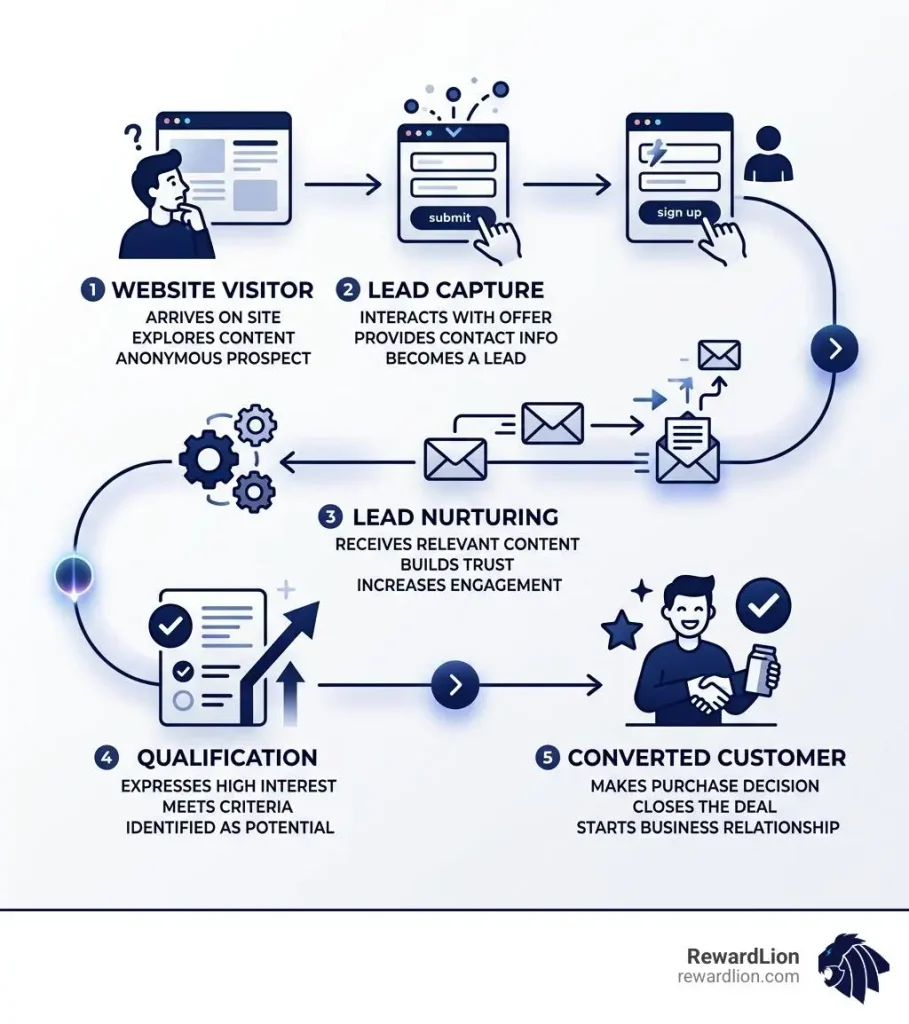
Imagine an accounting firm that works with small businesses. It publishes a guide about preparing for tax season and promotes it to local business owners through search and LinkedIn. People who download the guide have already shown interest in a problem the firm can help solve, making them more relevant prospects than completely unqualified contacts.
The process is straightforward. Relevant content attracts the right visitors, a useful offer encourages them to provide contact information, and follow-up communication helps move interested prospects toward a decision. For the business, this can produce qualified leads that are more relevant to the sales team while reducing time spent pursuing people who have little interest in the service.
How Does Digital Marketing Increase Sales and Conversions?
Digital marketing can increase sales and conversions by making it easier for interested visitors to take the next step. That action might be purchasing a product, booking an appointment, requesting a quotation, signing up for a service, or completing another business goal.
In practice, businesses improve the path from interest to action through focused landing pages, clear product descriptions, simple forms, straightforward checkout processes, relevant offers, and follow-up communication. Each improvement can remove friction that might otherwise prevent an interested person from completing the desired action.

Take an online store selling handmade candles. Visitors arrive through search and social media, but some leave items in their carts without purchasing. The store improves its product photographs, simplifies checkout, and sends an automated reminder to shoppers who abandoned their carts. It may also test an incentive such as free shipping to understand whether that reduces hesitation.
The cause-and-effect logic is practical. Clear information can increase confidence, a simpler process can reduce friction, and timely follow-up can bring back people who were already considering a purchase. If these changes improve the percentage of visitors who complete an action, the business can generate more sales from existing traffic. That means a stronger conversion rate can improve the return from marketing activity without requiring an equivalent increase in traffic.
How Does Digital Marketing Help Small Businesses Grow?
Digital marketing can help small businesses grow by giving them ways to reach customers, establish credibility, and learn from marketing activity without requiring the same resources as a large organization. Small businesses can often compete through relevance, specialization, service quality, and local visibility.
In practice, a small company can begin with relatively simple activities. It can maintain accurate local listings, create a straightforward website, collect genuine customer reviews, publish useful content, and test targeted advertising. Digital platforms also allow businesses to monitor performance and adjust their efforts rather than committing an entire budget to one approach.

Think of an independent plumber serving a mid-sized city. With an accurate local listing, a website showing services and service areas, and a steady stream of genuine customer reviews, the plumber can become easier to discover when homeowners search for repair services nearby. Even a modest increase in relevant enquiries can make a meaningful difference to a small operation.
The growth pattern can build over time. Local visibility creates enquiries, good service can lead to positive reviews, and those reviews can strengthen credibility for future customers. The business can then reinvest part of its revenue into marketing, equipment, staff, or expansion. In this way, digital marketing can support steady growth without requiring a large upfront advertising budget.
How Does Digital Marketing Help Businesses Compete Online?
Digital marketing helps businesses compete online because customers can compare multiple options quickly. Competition is no longer limited to businesses located on the same street or in the same neighbourhood. Depending on the product or service, customers may encounter companies from different cities or regions while researching their options.
In practice, competing online means being discoverable, communicating clearly, and giving people useful reasons to consider the business. Search-friendly content can improve visibility, clear messaging can explain what makes a company different, and customer feedback can reveal areas where competitors may be falling short. Businesses can use these insights to improve their own websites, services, and communication.
Suppose two boutique hotels operate in the same town. One has outdated photographs, limited information, and few recent reviews. The other provides clear accommodation details, useful local travel information, recent guest feedback, and quick responses to enquiries. A traveller comparing both options has more information available when evaluating the second hotel.
The cause-and-effect chain is direct. Better visibility creates opportunities to be considered, clearer information helps customers compare, and strong evidence can increase confidence. For the business, a stronger competitive online presence can help it attract customers based on relevance, clarity, credibility, and service rather than relying only on location or brand size.
How Does Digital Marketing Make Marketing Results Measurable?
Digital marketing makes marketing results measurable because many online interactions can be tracked. Businesses can often see where visitors came from, which pages they viewed, what actions they took, and whether those actions contributed to a business goal.
In practice, businesses use website analytics, search performance reports, email platforms, and advertising dashboards to monitor metrics such as traffic sources, clicks, enquiries, purchases, conversion rates, and cost per lead. These measurements can help connect specific campaigns or pages with customer activity. The quality of measurement depends on proper tracking and interpretation, but the available data can provide much more visibility than relying only on assumptions.

Imagine a furniture retailer running two advertisements for the same sofa. One focuses on price while the other emphasizes comfort. After collecting enough data, the retailer finds that the comfort-focused advertisement receives fewer clicks but generates more purchases. The company can then investigate the difference and adjust its advertising accordingly.
The process is simple: tracking reveals behaviour, analysis identifies patterns, and those insights guide future decisions. For the business, measurable results can mean better budget allocation, clearer accountability, and a stronger understanding of which marketing activities contribute to revenue. Instead of asking whether marketing “seems to be working,” the business has data it can examine and improve.
How Does Digital Marketing Help Businesses Understand Customers?
Digital marketing helps businesses understand customers by turning online behaviour and feedback into useful insights. Searches, clicks, purchases, comments, reviews, and email interactions can reveal what people are interested in, what questions they have, and where they may experience problems.
In practice, businesses can gather these insights from website analytics, search queries, customer surveys, social media discussions, email engagement, and purchase data. Looking at these sources together can reveal patterns in customer interests, timing, devices, locations, and preferences. The goal is not to track every action simply because it is possible, but to use relevant information to make better business decisions.
Take a pet supply store whose analytics show that many visitors are reading about food allergies in dogs. Its email data also shows that puppy owners respond differently to content than owners of senior dogs. The store can use those insights to create a guide for sensitive stomachs and develop more relevant content for different customer groups.
The process creates a useful feedback loop. Data shows behaviour, behaviour reveals potential needs, and those needs guide better content, products, and offers. For the business, stronger customer insights can make marketing more relevant, reduce poorly targeted campaigns, and help customers feel that the business understands their needs rather than treating everyone as one generic audience.
How Does Digital Marketing Support Long-Term Growth?
Digital marketing can support long-term growth because some marketing assets continue creating value after the initial work is complete. A useful article, positive customer review, helpful website page, or engaged email subscriber can potentially contribute to future customer acquisition and retention.
In practice, businesses build these assets gradually. A website can develop a library of useful content, an email list can grow through relevant customer relationships, social media can develop an active audience, and positive reviews can strengthen a company’s reputation. Performance data then helps the business improve these assets instead of repeatedly starting from zero.

Consider a software consultancy that publishes one practical article each month and shares it with subscribers. The first few months may generate limited attention. After a year, however, the company has a larger library of useful content, more opportunities to appear in relevant searches, and an audience that has become familiar with its expertise. Enquiries may begin arriving from people who discovered older content.
The process is cumulative. Consistent effort creates assets, those assets create visibility and engagement, and the resulting data guides future investment. For the business, this can contribute to sustainable growth, a stronger reputation, a more consistent pipeline of opportunities, and a stronger foundation for entering new markets or serving new audiences.
What Problems Can Businesses Face Without Digital Marketing?
Businesses without a meaningful digital presence can face challenges because potential customers may research companies online before making contact. When a business is difficult to find or provides very little useful information, it can miss opportunities during the early stages of customer research.
In practice, the problems can appear in several forms. A company may have weak search visibility, depend heavily on referrals or foot traffic, lack recent customer reviews, or provide little information about its products and services. It may also have limited data about what potential customers are looking for. Meanwhile, competitors with clearer online information may become easier for customers to discover and evaluate.
Picture a long-established tailoring shop known locally for quality but with no useful website and an outdated online listing. A customer searching for a custom suit finds several competitors with recent reviews, photographs, service details, and easy contact options. The tailoring shop may offer excellent craftsmanship, but the customer never gets the opportunity to compare it.
The effect can compound over time. Lower visibility can reduce enquiries, fewer enquiries can limit opportunities for growth, and limited customer data can make marketing decisions harder to improve. This can create lost opportunities and greater dependence on a small number of customer-acquisition channels, particularly when customer behaviour or local competition changes.
Why Will Digital Marketing Remain Important in the Future?
Digital marketing is likely to remain important because the ways people discover, evaluate, and interact with businesses continue to evolve through digital channels. Search behaviour, social platforms, video, artificial intelligence, automation, and other technologies may change how businesses communicate, but customers will still need useful information when deciding what to buy or whom to trust.
In practice, businesses will need to adapt rather than depend permanently on one platform or tactic. Artificial intelligence can help with analysis and content workflows, video can demonstrate products and services, automation can support timely communication, and newer search experiences can change how people discover information. However, the underlying principles remain familiar: understand the audience, provide useful information, communicate clearly, and build trust.
Imagine a regional travel agency adapting to changing search behaviour. Customers begin asking more conversational questions through voice assistants and AI-powered search tools. The agency responds by publishing clear answers to common travel questions, creating short destination videos, and using automation to send relevant trip ideas to interested customers.
The cause-and-effect logic is about adaptability. Businesses that continue learning from customer behaviour and adjusting their approach can remain relevant as platforms and habits change. The result is long-term relevance, helping a company maintain visibility, meet changing customer expectations, and continue building relationships in an evolving digital marketplace.
Conclusion
Digital marketing is important because it connects businesses with customers at the moments when people are discovering, researching, comparing, and choosing products or services. Its value is not simply the number of views, followers, or website visitors a business receives. The real value comes from what happens after that attention.
A strong digital presence can help a business become easier to find, build brand awareness, establish trust, engage customers, generate relevant leads, and turn interest into measurable actions. It can also provide data that shows what customers respond to, allowing businesses to improve their marketing decisions over time.
The process is connected. Visibility creates discovery, useful information builds interest, trust supports consideration, and a smoother customer journey can turn that interest into enquiries, bookings, or sales. Meanwhile, the information collected from digital activity gives businesses opportunities to understand customers and refine their approach.
This makes digital marketing relevant to both small businesses and larger organizations. The tools, budgets, and strategies may differ, but the underlying goal remains the same: reach the right people, provide value, build trust, and create sustainable business results.
Frequently Asked Question
Why is digital marketing important for businesses?
Digital marketing is important because it helps businesses become visible to potential customers, communicate useful information, build trust, generate leads, and support sales. It also provides measurable data that businesses can use to improve their marketing decisions.
How does digital marketing help a small business?
Digital marketing can help a small business reach local or broader audiences, build credibility through reviews and useful content, generate enquiries, and compete for attention online. Small businesses can also start with focused activities and adjust their efforts based on performance.
Does digital marketing increase sales?
Digital marketing can contribute to sales by attracting relevant visitors, building trust, improving the customer journey, and encouraging actions such as purchases, bookings, or enquiries. The actual result depends on factors such as the offer, audience, website experience, competition, and execution.
Why is customer trust important in digital marketing?
Customer trust reduces uncertainty when people are deciding whether to buy from or contact a business. Clear information, genuine reviews, useful content, transparent policies, and consistent communication can help potential customers feel more confident about taking the next step.
Why will digital marketing remain important in the future?
Digital marketing is likely to remain important because customers continue to use digital channels to find information and evaluate businesses. The platforms and technologies may change, but businesses will still need to remain visible, useful, relevant, and trustworthy as customer behaviour evolves.