

Think about your morning. Maybe you bought bread from the corner bakery, got a haircut from a local barber, or ordered a custom gift from someone’s online shop. Each of those moments involved a small business.
Small businesses are everywhere. They are the shops we walk past, the freelancers we hire, and the family restaurants we return to again and again. Yet many people are not sure what actually counts as a small business, or how it differs from a startup, a side hustle, or a big company.
If you are curious about starting one, working for one, or simply understanding how the economy works, this guide is for you. You will learn what a small business is, its key characteristics, the main types, real examples, how it works day to day, and why it matters so much. We will also look at the benefits, the challenges, and the practical steps to get started.
What Is a Small Business?
A small business is an independently owned and operated company that is limited in size, revenue, and number of employees. It usually serves a local or niche market, and it is run by an owner (or a small group of owners) who makes most of the important decisions personally.
There is no single worldwide definition. Each country, and even each industry, draws the line a little differently. Here are a few common ways of measuring size:
- Number of employees: In the United States, many small businesses are defined as having fewer than 500 employees, though the exact limit depends on the industry.
- Annual revenue: Some industries use a revenue ceiling instead. A small retailer, for example, might be capped at a certain yearly sales figure.
- Ownership and control: The business is usually not dominated by a larger company and is not publicly traded on a stock exchange.
The U.S. Small Business Administration (SBA) publishes official size standards that set these limits for each industry. Other countries have their own rules. In the European Union, for instance, a “small enterprise” generally has fewer than 50 employees, while the broader “SME” group (small and medium-sized enterprises) goes up to 250.
In everyday conversation, though, most people use a simpler rule of thumb: if the owner is closely involved, the team is small, and the company serves a limited market, it is a small business.
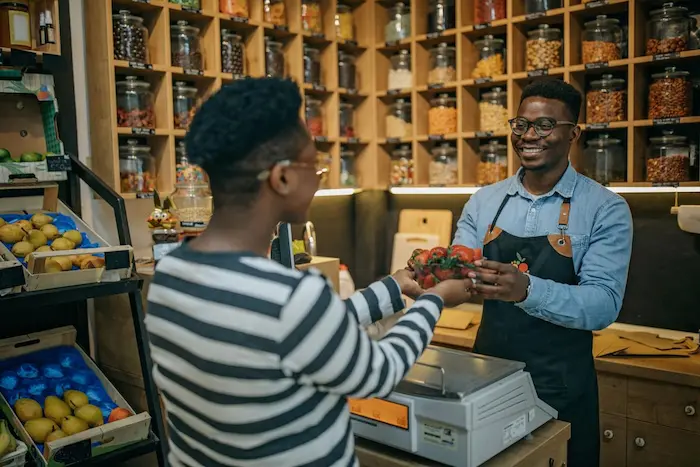
A quick example: Sara runs a bakery with six employees. She owns the shop, bakes many of the products, and knows most customers by name. That is a classic small business.
What Are the Main Characteristics of a Small Business?
Not every small business looks the same, but most share a handful of traits. Knowing them helps you recognize a small business and understand how it operates.

1. Independent Ownership
Small businesses are usually owned by one person, a family, or a few partners. There are no distant shareholders or giant corporate boards telling the owner what to do. The owner decides on prices, products, hiring, and growth.
2. Limited Number of Employees
Many small businesses have anywhere from one person (a solo freelancer) to a few dozen staff members. Teams are tight, and people often wear several hats. The person who greets customers might also handle social media or restock shelves.
3. Modest Revenue and Capital
Small businesses generally earn less than large companies and start with smaller budgets. Many are funded by personal savings, help from family, small loans, or reinvested profits rather than big investors.
4. Local or Niche Focus
Most small businesses serve a specific neighborhood, town, or specialized group of customers. A local pet groomer serves nearby pet owners. An online store selling handmade candles serves candle lovers. This focus helps them stand out.
5. Hands-On Management
Owners are typically involved in daily operations. They may handle sales, customer service, bookkeeping, and planning themselves, at least in the early years.
6. Personal Relationships
Because they are small, these businesses can build real relationships with customers and employees. People often choose them for the friendly, personal service that big chains struggle to match.
7. Flexibility
With fewer layers of approval, a small business can change quickly. If customers ask for a new product, the owner can often add it within days, not months.
8. Limited Market Share
A small business competes in a small slice of its industry. It does not dominate the market, so it relies on quality, service, and reputation to win customers.
What Are the Different Types of Small Businesses?
Small businesses can be grouped in two helpful ways: by legal structure (how the business is set up legally) and by what the business does (its activity or industry). Both matter when you are learning the basics.

Types by Legal Structure
The structure you choose affects your taxes, your paperwork, and how much personal risk you carry. Here are the most common options.
Sole proprietorship. This is the simplest form. One person owns and runs the business, and there is no legal separation between the owner and the company. It is easy and cheap to set up, but the owner is personally responsible for debts.
Partnership. Two or more people share ownership, profits, and responsibilities. A written partnership agreement is strongly recommended so everyone understands their role.
Limited liability company (LLC). An LLC separates your personal assets from the business to a large degree. If the business is sued or falls into debt, your home and savings are generally better protected. It is popular among small business owners for this reason.
Corporation. A corporation is a separate legal entity owned by shareholders. It offers strong liability protection but involves more paperwork and rules. Some small businesses choose an S corporation for tax reasons.
Cooperative. A co-op is owned and run by its members, who share the profits. You see this often in farming, grocery stores, and credit unions.
For tax and filing details on each structure, the IRS offers a helpful small business and self-employed resource center, and the SBA explains each option in its business guide.
Types by Business Activity
- Retail businesses: Sell products directly to customers, such as clothing shops, bookstores, and grocery stores.
- Service businesses: Sell skills or time, such as plumbers, tutors, accountants, and cleaners.
- Food and hospitality businesses: Cafés, restaurants, food trucks, bakeries, and small hotels.
- Manufacturing and production businesses: Make goods, such as furniture makers, small-batch soap makers, or tailors.
- Online and e-commerce businesses: Sell through websites, marketplaces, or social media.
- Home-based businesses: Operate from the owner’s home, such as freelance writing, online tutoring, or baking.
- Franchise businesses: Operate under a larger brand’s name and system, such as a local fast-food outlet or fitness studio, while still being owned by a small operator.
Micro, Small, and Medium Businesses
You will often hear the terms micro-business, small business, and medium-sized business. They simply describe different sizes:
| Size | Typical Employees | Typical Example |
| Micro-business | 1 to 9 | Freelance designer, home baker, solo consultant |
| Small business | 10 to 49 (often up to 99 or more, depending on the country) | Local restaurant, small clinic, boutique |
| Medium-sized business | 50 to 249 (varies) | Regional manufacturer, growing retail chain |
These numbers are general guides. Official definitions differ by country and industry.
What Are Some Examples of Small Businesses?
Seeing real-world examples makes the definition much easier to grasp. Here are common small businesses you probably already know.
Everyday Local Businesses
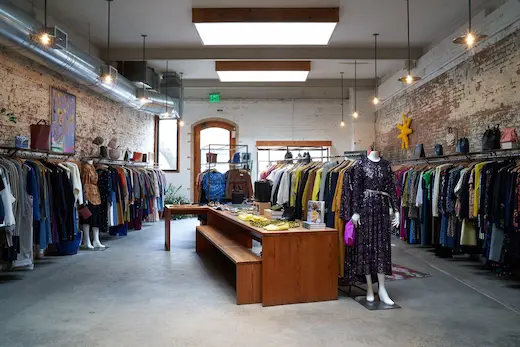
- Neighborhood grocery store: Run by a family, stocked with local favorites, open long hours.
- Independent café: A single location with a loyal community of regulars.
- Barbershop or hair salon: Often owned by the stylist, with a few chairs and a handful of employees.
- Auto repair shop: A trusted mechanic with a small team.
- Local bookstore: Curated shelves, community events, and personal recommendations.
Service-Based Examples
- Freelance graphic designer: Works alone, serves clients worldwide, and needs little more than a laptop.
- Home tutor or online coach: Earns by sharing expertise.
- Cleaning service: A small crew serving homes and offices.
- Accounting or bookkeeping firm: Two or three professionals helping other small businesses with taxes.
- Wedding photographer: A creative professional who may hire an assistant during busy seasons.
Online and Modern Examples
- Etsy-style handmade shop: Selling jewelry, candles, or art through an online marketplace.
- Dropshipping store: Sells products without keeping inventory, with suppliers shipping directly to customers.
- YouTube or content creator business: Earns money through ads, sponsorships, and digital products.
- Social media management agency: Helps other businesses grow their online presence.
A Closer Look: Three Short Stories
Story 1: The family restaurant. Ahmed and his wife open a 20-seat restaurant serving traditional meals. They hire four staff members. Ahmed cooks, his wife manages the accounts, and regular customers spread the word. Revenue is modest, but the business supports the family and gives jobs to neighbors.
Story 2: The solo freelancer. Maria is a freelance translator. She works from home, has no employees, and invests only in a computer and software. She is a one-person business, and it still counts.
Story 3: The online shop. Daniel makes leather wallets in his garage and sells them online. He started with ten wallets and now ships a hundred a month. He hires a part-time helper for packaging. This is a small business growing step by step.
How Does a Small Business Work?
Under the surface, every small business follows the same simple cycle: find a need, offer a solution, earn money, and reinvest. Let’s break that down.

1. It Starts With a Customer Problem
Successful small businesses solve a real problem. People are hungry, need their hair cut, want a website, or require help with taxes. The business offers a product or service that makes life easier.
2. It Creates a Product or Service
The owner decides what to sell, how to produce it, and what makes it special. This might be a recipe, a skill, a handmade product, or a reselling arrangement with a supplier.
3. It Reaches Customers
Customers must be able to find you. Small businesses usually do this through:
- A physical location with good foot traffic
- A website and local search listings (like Google Business Profile)
- Social media and email marketing
- Word of mouth and referrals
- Local partnerships and community events
4. It Earns Revenue
Revenue is the money customers pay. A small business earns it through sales, service fees, subscriptions, or contracts.
5. It Manages Costs
Running a business costs money. Common expenses include:
- Rent and utilities
- Inventory or raw materials
- Employee wages
- Marketing and advertising
- Insurance, licenses, and taxes
- Software and equipment
6. It Aims for Profit
The basic formula is simple:
Profit = Revenue − Expenses
If revenue is higher than expenses, the business makes a profit. If expenses are higher, it runs at a loss. Many small businesses take months or even years to become consistently profitable.
7. It Reinvests and Grows
Profit can be used to pay the owner, build savings, hire help, buy better equipment, or expand. Smart owners keep a cash reserve for slow months.
A Simple Example
Imagine a small bakery. In one month, it earns $8,000 in sales. Ingredients cost $2,500, rent and utilities cost $1,800, wages cost $2,200, and other expenses (marketing, packaging, insurance) cost $700. Total expenses are $7,200, leaving a profit of $800. That small profit might fund a new oven later, which helps the bakery produce more and earn more.
What Are the Benefits of Owning a Small Business?
People start small businesses for many reasons. Here are the biggest advantages.

Independence and Control
You are your own boss. You decide what to sell, how to run things, and what your company stands for. For many owners, this freedom is the biggest reward.
Unlimited Earning Potential
An employee usually earns a fixed salary. A business owner’s income can grow as the business grows. There are no guarantees, but successful owners can earn far more than they would in a typical job.
Flexibility
Many owners can set their own hours, choose where they work, and shape their schedule around family and personal goals. Early on, the hours may be long, but the flexibility often improves over time.
Pursuing Your Passion
A small business lets you turn something you love, like cooking, design, teaching, or fixing things, into a career. Work feels more meaningful when it reflects your values.
Close Customer Relationships
Small business owners know their customers. This helps them respond to feedback, personalize service, and earn loyalty that big companies often struggle to build.
Quick Decision-Making
There is no long chain of approvals. If something is not working, you can change it fast. If an opportunity appears, you can seize it quickly.
Tax Advantages
In many countries, business owners can deduct legitimate expenses such as supplies, equipment, and part of home office costs. Rules vary, so check with a qualified tax professional or official government resources.
Building Something of Value
A successful business is an asset. You can grow it, pass it to family, or sell it someday. It can create lasting financial security.
Contributing to Your Community
Small businesses create jobs, support other local businesses, and give back to their neighborhoods. Owners often feel a strong sense of purpose from that.
What Are the Challenges of Running a Small Business?
Owning a small business can be rewarding, but it is not easy. Being honest about the challenges helps you prepare for them.

Financial Risk
Most owners invest their own money, and there is no guaranteed income. According to U.S. Bureau of Labor Statistics data, roughly one in five new businesses closes within its first year, and about half are gone within five years. You can review the numbers yourself in the BLS business employment dynamics data. Careful planning and a financial cushion improve your odds.
Cash Flow Problems
A business can be profitable on paper and still run out of cash. Customers may pay late, while rent and wages are due on time. Tracking cash flow weekly is essential.
Long Hours and Stress
Especially in the early days, owners often work evenings and weekends. Burnout is real, so it helps to set boundaries and delegate early.
Limited Resources
Small businesses usually have smaller budgets, smaller teams, and less equipment. You must prioritize carefully and use your resources wisely.
Tough Competition
You may compete with bigger companies that have lower prices and large marketing budgets. Small businesses win by offering better service, unique products, and a strong local reputation.
Wearing Too Many Hats
One day you are the salesperson, the next you are the accountant, the marketer, and the cleaner. Not everyone enjoys or excels at every task. Over time, hiring help or outsourcing becomes important.
Hiring and Keeping Good Employees
Small businesses often cannot match big-company salaries and benefits. Offering growth, flexibility, and a good culture can help attract and retain talent.
Legal and Tax Requirements
Licenses, permits, tax filings, insurance, and employment rules can feel overwhelming. Mistakes can be costly, so learn the requirements for your location and industry.
Marketing and Visibility
A great product does not sell itself. You need to be found. Many beginners struggle with marketing because they have little time and money to spend on it.
Keeping Up With Change
Technology, customer habits, and economic conditions change constantly. Small businesses must adapt, whether that means adding online ordering, updating their website, or changing their offerings.
What Is the Difference Between a Small Business and a Large Business?
Small and large businesses can sell similar things, but they operate very differently. This table gives a quick comparison.
| Feature | Small Business | Large Business |
| Number of employees | Few (often under 100) | Hundreds or thousands |
| Ownership | Individual, family, or a few partners | Shareholders, often publicly traded |
| Revenue | Lower, limited | High, often millions or billions |
| Market reach | Local, regional, or niche | National or international |
| Decision-making | Fast, owner-led | Slower, multiple management layers |
| Funding | Savings, loans, small investors | Stock markets, large investors, bank financing |
| Structure | Simple and flexible | Complex, with departments and hierarchy |
| Customer relationships | Personal and direct | Often more standardized |
| Risk level | Higher personal risk to owner | Risk spread across many owners |
| Marketing budget | Small | Large |
| Flexibility | Can adapt quickly | Changes take longer |
What This Means in Practice
Size brings strengths and weaknesses. Large businesses benefit from economies of scale, which means they can produce and buy in bulk at lower costs. They also have strong brand recognition and bigger budgets.
Small businesses, on the other hand, are nimble. They can personalize service, experiment with new ideas, and respond to local needs faster than a huge corporation.
Many large companies started small. Famous brands began in garages, kitchens, and tiny offices. A small business today can become a large business tomorrow, though most stay small by choice, and that is perfectly fine.

How Do You Start a Small Business?
Starting a business may feel overwhelming, but breaking it into steps makes it manageable.
Step 1: Find and Test Your Idea
Start with a problem you can solve. Ask yourself:
- What skills or interests do I have?
- What do people around me struggle with?
- Would people actually pay for this?
Test your idea before investing heavily. Talk to potential customers, run a small pilot, or sell a few items to see the reaction.

Step 2: Research Your Market and Competitors
Learn who your customers are and what they want. Look at competitors and notice what they do well and where they fall short. This helps you find a gap you can fill.
Step 3: Write a Simple Business Plan
A business plan does not have to be long. It should explain:
- What you sell and to whom
- How you will reach customers
- Your expected costs and income
- Your goals for the first year
The SBA offers free guidance on writing a business plan if you need a template.
Step 4: Figure Out Your Finances
Estimate your startup costs, including equipment, inventory, licenses, marketing, and the money you need to cover the first several months. Decide how you will fund the business, whether through savings, a loan, a grant, or help from family. Open a separate business bank account to keep things organized.
Step 5: Choose a Legal Structure
Pick a structure such as sole proprietorship, LLC, or partnership based on your risk, taxes, and goals. If you are unsure, speak to an accountant or a lawyer.
Step 6: Name and Register Your Business
Choose a memorable name, check that it is available, and register it with the proper authorities. Also consider securing a matching website domain and social media handles.
Step 7: Get Licenses, Permits, and Insurance
Requirements vary by location and industry. A food business, for example, needs health permits. Check local, state or provincial, and national rules, and consider business insurance to protect yourself.
Step 8: Set Up Your Operations
Arrange your workspace, equipment, suppliers, payment methods, and basic bookkeeping tools. Even simple accounting software makes a big difference later.
Step 9: Build Your Brand and Market Your Business
Create a simple, professional presence:
- A clear logo and consistent look
- A basic website or online store
- A Google Business Profile if you serve a local area
- Active social media on the platforms your customers use
- Early offers or referral rewards to attract your first customers
Step 10: Launch, Learn, and Improve
You do not need everything to be perfect. Launch, listen to customer feedback, and keep improving. The most successful small businesses are the ones that adapt.
Pro tip: Start lean. Avoid big expenses until you have proof that customers want what you offer.
Why Are Small Businesses Important to the Economy?
Small businesses are often called the backbone of the economy, and the numbers show why.
They Make Up Nearly Every Business
According to the SBA Office of Advocacy, there are more than 33 million small businesses in the United States, and they account for about 99.9% of all businesses. The pattern is similar in many other countries.
They Create Jobs
Small businesses employ roughly half of all private-sector workers in the U.S. They also create many new jobs, especially when young businesses start up and grow.
They Drive Innovation
Because they are flexible, small businesses often try new ideas first. Many new products, services, and business models start in small, scrappy companies before spreading widely.
They Strengthen Local Communities
Money spent at a local business tends to stay in the community. Owners buy supplies locally, hire neighbors, and sponsor local events. This is often called the multiplier effect.
They Increase Competition and Choice
Small businesses give consumers more choices and keep prices fair. Without them, a few large companies could dominate every market.
They Support Entrepreneurship and Opportunity
Small businesses give people, including women, immigrants, young people, and those without formal job opportunities, a path to earn a living and build wealth.
They Contribute to Economic Resilience
A diverse economy with many small businesses is less dependent on any single employer or industry. If one business closes, others continue.
The OECD also tracks the vital role small and medium-sized enterprises play in economies around the world, including their contribution to employment and GDP.
Conclusion
A small business is an independently owned company that is limited in size, serves a focused market, and is usually run hands-on by its owner. It might be a corner shop, a solo freelancer, a family restaurant, or an online store. What they share is a close connection to customers and a spirit of independence.
Owning one comes with real rewards: freedom, flexibility, the chance to follow your passion, and the opportunity to build something that lasts. It also comes with real challenges, including financial risk, long hours, competition, and a lot of responsibility. The good news is that most of these challenges become easier with research, planning, and a willingness to learn.
Small businesses also matter far beyond their owners. They create jobs, spark innovation, strengthen communities, and keep local economies healthy. Every time you support one, you help someone’s dream and your neighborhood’s future.
If you are thinking about starting your own, begin small. Test your idea, learn your market, and take one step at a time. And if you are not planning to become an owner, you can still make a difference by shopping locally and supporting the small businesses around you.
Every big company started as a small business with one person and one idea. Yours could be next.
Frequently Asked Questions
How many employees can a small business have?
It depends on the country and industry. In the United States, many industries use a limit of 500 employees, while others use revenue limits instead. In the European Union, a small enterprise generally has fewer than 50 employees. Always check the official definition that applies to you, especially if you are applying for loans or government contracts.
Is a freelancer considered a small business?
Yes. A freelancer who offers services to clients and earns income is generally operating a small business, even if they are the only employee. Most freelancers are sole proprietors, though some form an LLC or similar entity.
What is the difference between a small business and a startup?
A small business usually aims for steady, sustainable income, such as a local shop. A startup is typically designed to grow very fast and scale, often with outside investment, such as a tech company building a new app. A startup may begin as a small business, but the goals and funding models are different.
What is the most common type of small business?
Sole proprietorships and very small businesses with no employees are the most common. Many are freelancers, consultants, and online sellers who operate alone.
How much money do you need to start a small business?
It varies widely. Some service businesses can start with a few hundred dollars and a laptop. A restaurant or manufacturing business may need tens of thousands or more. Start by listing your essential costs, then look for ways to begin small.