

Every day, you interact with businesses without necessarily thinking about them. You buy breakfast from a local shop, use a mobile network to make a call, order something online, pay for transportation, or use an app to complete a task. Behind each of these ordinary experiences is a business creating, delivering, or selling something that people find useful.
Businesses come in many forms. A neighborhood bakery may have only a few employees, while a technology company can serve millions of customers around the world. A freelancer can run a business from a laptop, while a manufacturer may operate factories, warehouses, and distribution centers. Despite these differences, they all have something in common: they provide value to customers through products or services.
But what is business beyond the simple idea of buying and selling? At its most basic level, a business is an organized activity in which a person or organization creates and provides products or services that deliver value to customers in exchange for money or another form of value. The concept is simple, but the activities behind it can be surprisingly complex.
Understanding business is useful for almost everyone. Students can use business knowledge to understand how organizations and economies work. Employees can better understand how their workplaces generate revenue and manage costs. Freelancers can apply business principles when setting prices, finding clients, and managing their services. For aspiring entrepreneurs, these fundamentals provide a starting point for turning an idea into something practical.

A business is also much more than selling a product. It involves understanding customers, developing solutions, setting prices, managing resources, promoting products and services, handling finances, delivering value, and adapting when circumstances change.
In this guide, we will explore the meaning of business from the ground up. You will learn how businesses work, why they exist, the major types of businesses, how they make money, what business models are, and how customers, products, services, revenue, expenses, and profit connect with one another. We will also look at entrepreneurship, small businesses, online businesses, important business skills, technology, common challenges, and sustainable growth.
By the end, you should have more than a definition to memorize. You should have a practical understanding of how the different parts of a business fit together and why businesses play such an important role in everyday life.
What Is a Business?
A business is an organized activity in which a person or group creates, offers, or sells products or services to meet the needs of customers. In most cases, the customer provides money in exchange for the value they receive. This basic exchange is at the heart of almost every business, whether it is a small local shop, a freelance service, an online store, or a large international company.
For example, when you buy a meal from a restaurant, you are paying for more than just the ingredients. The restaurant provides the food, preparation, location, service, convenience, and overall experience. In return, the restaurant receives revenue that can be used to pay employees, purchase ingredients, cover operating costs, and continue serving customers.
A business can sell physical products, such as clothing, furniture, food, or electronics. It can also provide services, such as consulting, web development, accounting, transportation, education, or graphic design. Modern businesses may even sell digital products, subscriptions, software, memberships, or access to online platforms.
However, simply selling something does not automatically make a business successful. A sustainable business needs to understand what customers actually want, create an offering that provides meaningful value, communicate that value effectively, and operate in a way that covers its costs. It also needs to adapt when customer preferences, competition, technology, or market conditions change.
Businesses can differ greatly in size and structure, but the fundamental idea remains similar: a business creates value for customers and receives value in return. The value received by the business may be money, while the customer receives a product, service, solution, convenience, experience, or another benefit.
Understanding this basic concept makes it easier to understand the other parts of business, including customers, revenue, expenses, profit, business models, marketing, operations, and growth.
How Does a Business Work?
At its core, a business works by solving a problem, satisfying a need, or fulfilling a desire in a way that customers consider valuable. To make that happen, the business brings together resources such as money, people, materials, knowledge, technology, and time.
The process often starts with an opportunity. Someone notices that people need something or that an existing solution could be improved. That observation can lead to a product or service designed around the need.
Consider a local bakery. People in the community want fresh bread, cakes, pastries, or prepared food. The bakery purchases ingredients and equipment, uses labor and expertise to prepare its products, and makes those products available to customers. Marketing helps people discover the bakery, while sales generate revenue. That revenue is then used to pay for ingredients, wages, rent, utilities, equipment, and other expenses.
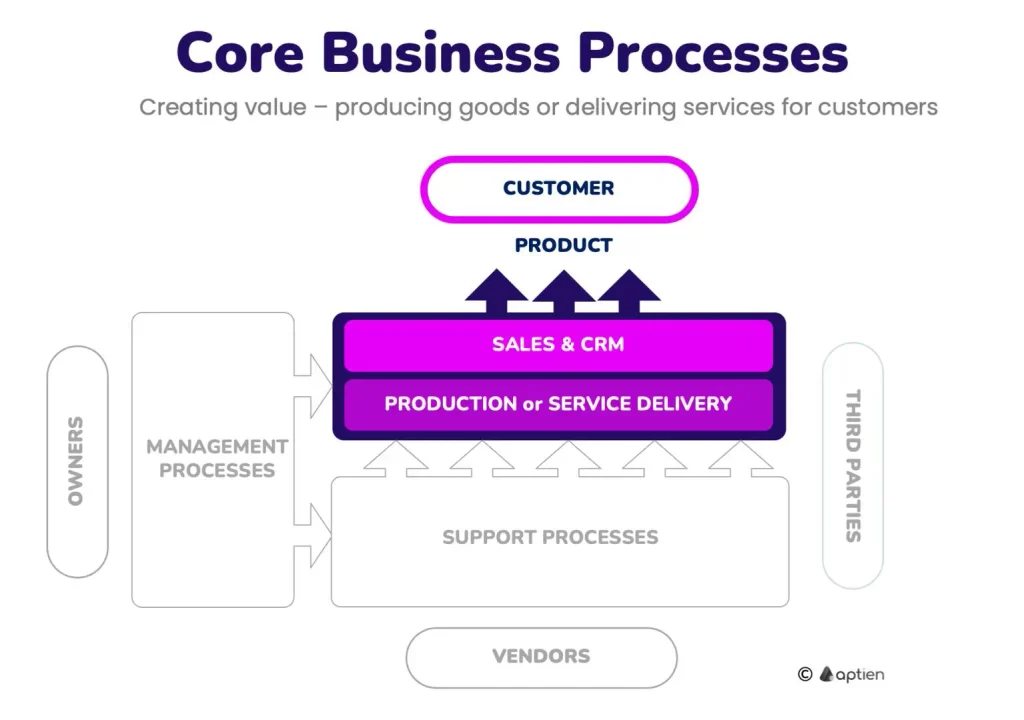
A software business follows the same basic principle, even though its resources look very different. Instead of ovens and ingredients, it may rely on programmers, designers, cloud infrastructure, software tools, and technical knowledge. The company might develop an application that helps customers manage their finances and charge them a monthly subscription for access.
The important point is that a business is not simply a single transaction. It is an ongoing system.
Owners and managers have to make decisions about what to offer, which customers to serve, how much to charge, how to reach those customers, and how to use available resources. They also need to monitor results and make changes when something is not working.
After a sale, the relationship continues. Customers may need support, products may need improvement, and expenses must still be managed. Competitors may introduce alternatives, while customer expectations can change.
A business therefore takes resources and organizes them into a process that creates value. When that process is financially and operationally sustainable, the business can continue serving customers and potentially grow.
What Is the Main Purpose of a Business?
A commercial business generally exists to create value for customers while generating enough revenue to cover its costs and maintain sustainable operations. Profit is usually an important objective because it gives a business the financial resources needed to continue operating and invest in the future.
The way this purpose appears in practice depends on the business. A restaurant creates value by providing meals and an experience customers are willing to pay for. A software company may create value by helping users save time or complete difficult tasks more efficiently. A consulting firm provides expertise that a customer may not have internally.
In each case, the business is offering a solution to a customer need.
This is why simply having something to sell is not enough. A product can exist without becoming a successful business if customers do not see enough value in it. Likewise, a service provider can have strong skills but struggle to build a sustainable business if there is not enough demand for those services.
Financial sustainability matters because businesses have ongoing obligations. Employees need to be paid, suppliers need to be compensated, equipment requires maintenance, technology has costs, and marketing may require investment. If a business continually spends more than it can support through its revenue, maintaining operations becomes increasingly difficult.
At the same time, profit is not the entire purpose of every organization. Some businesses pursue social or environmental objectives alongside commercial goals. Nonprofit organizations may generate revenue through services, memberships, donations, or other activities while directing resources toward a particular mission.
The purpose of a business can therefore be understood through two connected ideas: creating value and sustaining the organization that creates it. Without customer value, there may be little reason for people to buy. Without financial sustainability, the business may not be able to continue providing that value.
Why Is Business Important in Everyday Life?
Business is closely connected to everyday life because most of the products and services people use are created, distributed, or supported by businesses.
Think about a typical day. You may wake up and use electricity supplied through a commercial utility, purchase breakfast from a store, travel using transportation services, communicate through a mobile network, use software at work, buy products online, and pay for entertainment through a digital platform. Each activity can involve multiple businesses working behind the scenes.
Businesses also connect different parts of the economy. A supermarket does not simply sell groceries. Food producers, farmers, manufacturers, transport companies, wholesalers, payment providers, employees, and technology companies may all contribute to getting those products into the customer’s hands.
Employment is another major connection. Businesses need people with different skills to perform sales, marketing, finance, customer service, production, design, technology, management, logistics, and other functions. Small businesses can create jobs within local communities, while larger organizations may employ people across many regions.
Competition can also encourage businesses to improve. When customers have several choices, companies have incentives to provide better products, improve service, introduce useful features, control costs, or find more convenient ways to serve people.
Business knowledge is useful at an individual level, too. Understanding pricing, revenue, expenses, customer behavior, and marketing can help someone make better decisions as a consumer, employee, freelancer, or entrepreneur.
For someone considering starting a business, the importance becomes even clearer. An idea is only the beginning. A practical business needs customers, a useful offering, a method of delivering that offering, a way to generate revenue, and a system for controlling costs.
Business is therefore not something that exists only inside offices or textbooks. It is part of the system through which people exchange value and obtain many of the things they use every day.
What Are the Main Types of Business?
There is no single way to classify every business. Organizations can be grouped according to ownership, legal structure, size, industry, products, services, location, or operating model. One business can also belong to several categories at once.
One common ownership structure is a sole proprietorship, in which one individual owns and operates the business. Freelancers, independent consultants, and some small business owners may use this type of structure, depending on the laws and requirements in their jurisdiction.

A partnership involves two or more people operating a business together under an agreed arrangement. Partners may contribute different amounts of capital, knowledge, skills, or other resources and divide responsibilities according to their agreement.
Larger or more formally structured businesses may operate through entities such as corporations or limited-liability companies, depending on local law. These structures can affect ownership, liability, taxation, reporting, and management.
Businesses can also be classified according to what they sell. A product-based business primarily sells physical or digital products, while a service-based business provides expertise, labor, activities, or solutions.
For instance, an online clothing store primarily sells products. A marketing agency primarily sells services. A software company may combine both by selling access to digital software while also offering training, implementation, or support.
Another useful category is the online business. These businesses rely heavily on internet-based channels for sales, service delivery, marketing, or customer communication. E-commerce stores, software services, online education businesses, digital agencies, and many freelance operations can fall into this category.
Size provides another distinction. Depending on the definition used by a country or industry, businesses may be considered small, medium-sized, or large based on factors such as employees, revenue, assets, or market reach.
These categories show why businesses can look completely different while still sharing the same basic purpose: creating and exchanging value.
How Do Businesses Make Money?
Businesses generate money by creating revenue from the products, services, or other value they provide. Revenue represents money earned from business activities before the relevant expenses are deducted.
Suppose a store sells 100 products for $20 each. Its sales revenue is $2,000. That figure tells us how much the business generated from those sales, but it does not tell us how much the owner actually keeps.
The store may have paid $800 for inventory, $300 for rent, $200 for employee wages, and additional amounts for electricity, advertising, payment processing, transportation, and other costs. Once the relevant expenses are considered, the amount remaining contributes to the business’s profit or loss.
Businesses use different revenue methods depending on what they offer.
A traditional retailer may generate most of its income through individual product sales. A software company may charge customers a recurring subscription. A freelancer may charge per project or use an hourly rate. An online marketplace may take a commission from transactions between buyers and sellers.
Advertising can be another source of revenue. A website or application may provide free access to users while businesses pay to reach that audience through advertisements.
Licensing provides another model. A company may allow another organization to use its software, technology, brand, content, or intellectual property in exchange for fees.
Some businesses combine several revenue streams. A software company, for example, might earn recurring subscription revenue while also charging for premium features, implementation services, or additional usage.
Pricing plays a central role in all of these approaches. A business needs to consider its costs, customer demand, competitors, perceived value, and overall strategy when determining what customers should pay.
A business can increase revenue by reaching more customers, selling more to existing customers, introducing additional offerings, expanding into new markets, or improving the value of its products and services.
However, revenue alone does not determine whether a business is financially healthy. A company can generate impressive sales and still have little profit if its costs are too high. That is why revenue and profitability need to be considered separately.
What Is a Business Model?
A business model explains how a business creates value, delivers that value to customers, and generates revenue from the process. It is essentially the logic behind how the business operates financially and commercially.
Consider a subscription business. Instead of charging customers only once, the company collects payments regularly, often every month or year. This model can provide recurring revenue when customers continue using the service.
An e-commerce business works differently. It may purchase products from suppliers and sell them through an online store, or it may manufacture its own products and sell them directly to consumers.
A marketplace business connects buyers and sellers rather than producing every product itself. The platform can earn money by charging commissions, transaction fees, subscriptions, or advertising fees.
Another model is freemium. A company provides a basic version of a product for free and charges users for additional features, higher usage limits, or premium services. This approach is particularly common with digital products.
Advertising-based businesses generate revenue by providing access to an audience. Users may access content or services at no direct charge while advertisers pay the business to reach those users.
The business model affects much more than how money is collected. It influences pricing, marketing, customer acquisition, technology requirements, operations, and financial planning.
Two companies can sell similar products but operate under very different models. One might rely on one-time purchases, while another could use subscriptions. One might sell directly to consumers, while another might work through distributors or marketplaces.
For an entrepreneur, choosing a business model means asking an important question: How will this business consistently create value for customers and receive enough value in return to remain sustainable?
A good idea needs a practical answer to that question before it can become a durable business.
What Is the Difference Between a Business and a Company?
The words “business” and “company” are often used as though they mean exactly the same thing, but they can describe different concepts.
Business is the broader term. It can refer to a commercial activity, an organization, or the process of providing products and services in exchange for value. Someone working independently as a freelance writer, designer, developer, or consultant can operate a business without necessarily forming a separate incorporated company.
A company generally refers to a formally established legal entity. The exact meaning and legal structures vary between countries, but a company can have its own rights, responsibilities, assets, and obligations.
Imagine a photographer working independently. They may provide photography services directly to customers under their own name. That is a business activity. Another photographer may establish a registered company, hire several photographers, enter contracts through the company, and operate under a separate business identity.
The distinction becomes important when discussing legal structure. The structure selected by a business owner can affect taxation, liability, ownership, reporting requirements, and management responsibilities. These rules depend heavily on the jurisdiction involved.
This means that having a business does not automatically mean having a corporation or another formal company structure.
The easiest way to understand the difference is to think of business as the broader commercial activity and company as a particular type of formally organized entity.
The terms can overlap in everyday language, but understanding the distinction becomes useful when learning about business registration, ownership, legal structures, and entrepreneurship.
What Is the Difference Between Business and Entrepreneurship?
Business and entrepreneurship are closely connected, but they emphasize different aspects of commercial activity.
Business generally refers to the broader process of creating, delivering, selling, and managing products or services. Entrepreneurship focuses more heavily on identifying opportunities and creating or developing ventures, often while dealing with uncertainty and risk.
For example, someone who owns an established grocery store is operating a business. Someone who notices that local customers struggle to get groceries delivered and creates a new delivery service is engaging in entrepreneurship. A person can also be both an entrepreneur and a business owner.
Entrepreneurship often involves experimentation. A new business idea may not work exactly as expected, so the entrepreneur might test different customer groups, prices, products, marketing channels, or delivery methods.
Uncertainty is a major part of the process. Before a new venture is established, there may be no guarantee that enough customers will buy the product or service. Competitors can appear, customer preferences can shift, and economic conditions can change.
Once a venture becomes established, business management becomes increasingly important. The owner needs to manage finances, employees, customers, operations, technology, marketing, and daily activities.
The two concepts therefore overlap throughout the life of a venture. Entrepreneurship can be thought of as the opportunity-seeking and venture-building side, while business encompasses the broader commercial operation.
An established company can also behave entrepreneurially. It may launch a new product, enter an unfamiliar market, develop new technology, or experiment with a different business model.
Understanding this relationship helps explain why entrepreneurship is not completely separate from business. Instead, it is one important way new businesses and opportunities are created and developed.
What Are the Main Functions of a Business?
A business may have different departments and job titles depending on its size, but several fundamental functions appear in most organizations.
Marketing is responsible for understanding the market and communicating the value of the business’s offering. It can involve research, branding, content, advertising, social media, search engine optimization, email marketing, and other activities.
Sales turns potential interest into actual purchases. In a local store, this may happen through direct conversations with customers. In an online business, sales may occur through a website, marketplace, sales team, or automated checkout process.
Operations handle the work required to create and deliver the product or service. A manufacturer may focus on production, inventory, quality control, and logistics. A service business may focus on scheduling, project management, and client delivery.
Finance and accounting provide information about revenue, expenses, assets, liabilities, cash flow, and profitability. This information helps owners and managers make financial decisions.
Human resources becomes particularly important as organizations employ more people. Recruitment, training, compensation, performance management, and workplace policies all fall within this area.
Customer service supports customers before and after a purchase. A business may need to answer questions, solve problems, process returns, provide technical assistance, or maintain ongoing relationships.
Technology now supports nearly every other function. Businesses may depend on websites, databases, cloud systems, cybersecurity, automation, analytics, and artificial intelligence.
These functions are not isolated. Marketing can create awareness, sales can convert that interest into purchases, operations can deliver the offering, finance can track the results, and customer service can help maintain the relationship.
The strength of a business often depends on how effectively these activities work together.
What Are Products and Services in Business?
Products and services are two fundamental ways a business provides value.
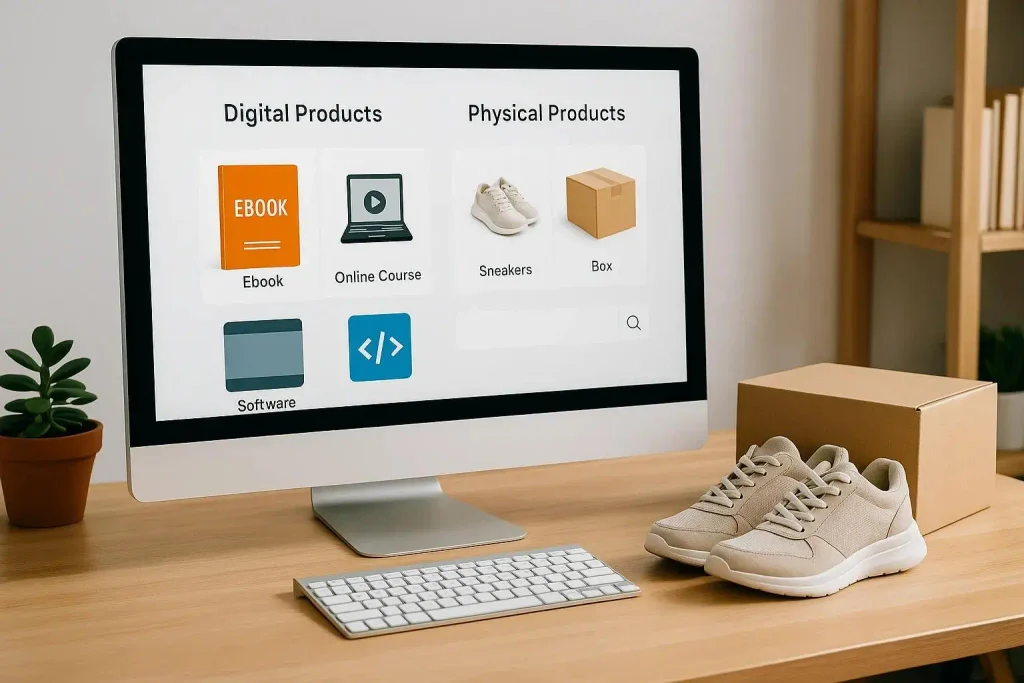
A product is generally something customers purchase and use. Physical products include clothing, food, furniture, electronics, vehicles, and household goods. Digital products can include software, ebooks, templates, courses, digital artwork, and other downloadable or online resources.
A service is an activity, expertise, or solution provided to a customer. Examples include accounting, consulting, transportation, cleaning, education, web development, graphic design, maintenance, and professional advice.
The distinction is useful, but it is not always absolute. Many businesses provide both.
A computer company might sell laptops and also provide installation, technical support, warranties, and maintenance. A fitness business may sell exercise equipment while providing personal training. A software company may provide an application while charging separately for implementation or consulting.
The starting point for creating either a product or service is usually a customer need.
A business needs to understand what customers actually value. Sometimes that value is the product itself. In other cases, convenience, reliability, speed, expertise, design, support, or the overall experience may matter just as much.
This is why two businesses can sell similar products while customers perceive one as more valuable than the other.
For example, two stores might sell the same category of clothing, but one may attract customers through better design, easier online ordering, faster delivery, stronger customer support, or a trusted brand.
A successful product or service therefore does more than exist. It needs to solve a meaningful problem or provide a benefit that customers consider worth paying for.
Who Are Customers and Why Are They Important to a Business?
Customers are the people or organizations that purchase or use a business’s products or services. In most commercial businesses, they are central to the entire operation because their purchasing decisions generate revenue.
Businesses usually identify a target market rather than trying to serve everyone.
A target market is a group of potential customers whose needs are particularly relevant to the business. For example, professional accounting software might target small and medium-sized businesses, while a children’s clothing brand might focus on parents and families.
Understanding customers involves more than knowing basic demographics. Businesses may study what customers need, what problems they experience, how much they are willing to spend, what alternatives they consider, and why they choose one solution over another.
This information can influence product development, pricing, marketing, and customer service.
Customer feedback is especially valuable. Reviews, surveys, support conversations, sales data, and direct interactions can reveal what customers appreciate and where the business needs to improve.

The relationship does not necessarily end when someone makes a purchase. Businesses often try to retain customers by providing reliable products, responsive support, useful communication, and consistent value.
Trust is another important factor. Customers want confidence that a business will deliver what it promises and respond appropriately if something goes wrong.
A business that understands its customers can make better decisions because it has a clearer picture of who it is serving and why those people buy.
Ultimately, customers are not simply a source of money. Their needs create demand, their purchases generate revenue, their feedback provides information, and their expectations influence how businesses develop.
What Is the Role of Profit in Business?
Profit is the amount remaining after a business accounts for its relevant expenses against its revenue. For a commercial business, it is an important measure of financial performance and sustainability.
Suppose a company generates $10,000 in revenue during a particular period and has $7,000 in relevant expenses. The remaining $3,000 represents profit before considering the specific accounting and tax treatment that may apply.
Profit gives businesses financial flexibility. A company can use it to invest in new equipment, hire employees, improve technology, develop products, increase marketing, expand operations, or create financial reserves.
For owners and investors, profit can also represent a return on the capital and risk involved in operating the business.
However, profit should not be viewed in isolation.
A growing company may intentionally spend heavily on research, product development, marketing, or expansion. Those investments can reduce short-term profit while supporting longer-term goals.
Profit is also different from cash flow. A business can record revenue and even report an accounting profit while having limited cash available at a particular moment. For example, customers may have purchased on credit and not yet paid their invoices, or money may be tied up in inventory.
The level of profit a business can generate also depends heavily on its industry and business model. A manufacturer may have substantial production costs, while a digital service may have a different cost structure.
The basic relationship remains important: revenue represents money generated by business activities, expenses represent the costs involved, and profit represents what remains after those relevant costs are accounted for.
Understanding this relationship gives business owners a foundation for making decisions about pricing, investment, costs, and growth.
What Is the Difference Between Revenue, Profit, and Expenses?
Revenue, expenses, and profit describe different parts of a business’s financial picture.
Revenue is the money a business generates from selling products or services. If an online store sells $5,000 worth of products during one month, its sales revenue for that period is $5,000.
Expenses are the costs involved in operating the business. These might include employee wages, rent, materials, advertising, transportation, software, utilities, professional services, and other operating costs.
Profit is generally what remains after relevant expenses are deducted from revenue.
Imagine two businesses that each generate $100,000 in annual revenue. The first spends $80,000 on relevant expenses, while the second spends $50,000. Although their revenue is identical, the amounts remaining after those expenses are very different.
This example shows why revenue alone cannot tell you whether a business is profitable.
A company might have rapidly increasing sales but still struggle financially if the cost of acquiring customers, producing goods, paying employees, or delivering services rises just as quickly.
Businesses therefore monitor their expenses alongside revenue. They may look for unnecessary costs, improve efficiency, negotiate with suppliers, adjust pricing, or change processes.

Cash flow adds another important consideration. It tracks the movement of money into and out of a business. A business might have sales that have not yet been collected as cash, which can create short-term financial pressure.
These concepts form the foundation of business finance. Once you understand them, it becomes easier to understand financial statements, budgets, margins, pricing decisions, and the financial health of an organization.
What Is a Small Business?
A small business is generally an independently operated business that operates on a relatively small scale. The exact definition varies by country and industry and may be based on employee numbers, revenue, assets, or other factors.
Small businesses exist in almost every sector. A local restaurant, repair shop, consulting agency, online store, construction company, marketing agency, or independent professional practice can all be considered small businesses depending on the applicable definition.
Many begin with one person or a small team. In the early stages, the owner may handle marketing, sales, customer service, finance, operations, and administration personally.
Technology has expanded the possibilities for small businesses. A freelancer can work with clients remotely. A designer can sell digital products online. An educator can create courses for customers in different countries. An e-commerce seller can reach customers through an online store without maintaining a traditional retail location.
Small businesses can also compete by focusing on specific markets. Because their operations may be smaller, some can respond quickly to customer feedback or specialize in a particular service.
However, limited resources can create challenges. A small business may have less capital, fewer employees, and less room for financial mistakes than a large organization.
Customer acquisition and cash-flow management can be particularly important because losing a few major customers may have a noticeable effect on a small operation.
A small business also does not have to become a large corporation to be successful. An owner may intentionally maintain a manageable size while building a reliable customer base and sustainable income.
The defining characteristic is generally scale, not whether the business operates online, sells products, or provides services.
What Is an Online Business?
An online business is a business that uses the internet as an important part of its sales, operations, service delivery, marketing, or customer communication.
The internet has changed the geographic boundaries of many businesses. A freelancer can work with a client in another country. An e-commerce store can sell products beyond its local area. A software company can deliver its product digitally without shipping a physical item.
Online businesses take many forms.
E-commerce stores sell physical products through websites or online marketplaces. Software companies provide digital tools through websites or applications. Online educators may sell courses, memberships, or training. Freelancers and agencies can provide writing, design, development, marketing, consulting, and other professional services remotely.
Digital products are another category. These can include ebooks, templates, software, courses, design assets, and other digital resources.
Although the environment is different, online businesses still depend on the same fundamental principles as traditional businesses. They need valuable offerings, customers, pricing, marketing, financial management, and reliable operations.

Digital businesses may use search engines, websites, social media, email, online marketplaces, paid advertising, and content marketing to reach customers.
Being online does not automatically make a business easy to operate. Online businesses still have to build trust, compete for attention, manage technology, protect customer information, process payments, handle support requests, and adapt to changing platforms and customer expectations.
Many modern businesses are also hybrid. A physical retailer may sell through both a store and a website, while an online company may maintain warehouses, offices, or physical customer-service operations.
Online business is therefore best understood as a business that makes significant use of internet-based channels rather than as a completely separate concept from traditional business.
What Skills Are Important for Running a Business?
Running a business requires several types of skills, and the exact combination depends on the industry and size of the organization.
Communication is one of the most useful. Business owners communicate with customers, employees, suppliers, partners, and service providers. Clear communication helps establish expectations and maintain professional relationships.
Financial literacy is equally important. A business owner should understand revenue, expenses, profit, cash flow, pricing, margins, and budgeting well enough to make informed decisions.
Marketing skills help businesses attract attention and explain why their products or services are valuable. Modern marketing can involve content creation, search engine optimization, social media, email, branding, advertising, and market research.
Sales knowledge matters because even a great product needs customers. Understanding how people discover, evaluate, and purchase an offering can help a business improve its sales process.
Problem-solving is essential because unexpected situations are unavoidable. A supplier may fail to deliver, a customer may complain, an employee may leave, or an important system may stop working.
Organization and time management become especially important for small business owners who often handle multiple responsibilities simultaneously.
Technology skills are increasingly valuable as businesses depend on websites, software, automation, analytics, artificial intelligence, and digital communication.
Leadership becomes more important as a business grows. Owners and managers may need to delegate tasks, establish priorities, build teams, and make decisions that affect other people.
The good news is that one person does not need to become an expert in every area. Business owners can hire employees, work with freelancers, outsource specialized tasks, or seek professional advice.
The goal is not to know everything. It is to understand the important areas well enough to make sound decisions and recognize when additional expertise is needed.
How Does Technology Affect Modern Business?
Technology has changed how businesses operate, communicate, sell, analyze information, and deliver products and services.
A business can now reach customers through websites, search engines, social media, mobile applications, and online marketplaces. Digital payment systems can make transactions faster, while cloud-based tools allow teams to work together from different locations.
Automation can reduce repetitive tasks. A business might use software to manage inventory, send invoices, schedule appointments, process orders, organize customer information, or generate routine reports.
Data has also become an important business resource. Companies can examine sales trends, website behavior, customer interactions, and operational performance to make more informed decisions.

Artificial intelligence is expanding the range of tasks businesses can automate or assist with. Depending on the application, AI can support customer service, content production, data analysis, recommendations, workflow automation, and software development.
Technology has also created entirely new business models. Software-as-a-service, online marketplaces, streaming platforms, digital education, and many other modern services would be difficult to operate in their current form without digital infrastructure.
But technology is not automatically beneficial simply because it is new.
Businesses need to consider cybersecurity, privacy, reliability, implementation costs, employee training, and the quality of the information produced by automated systems.
A company can purchase sophisticated technology and still have a weak business if the underlying product does not solve a meaningful problem or customers do not value the offering.
Technology should therefore be viewed as an enabler. It can improve efficiency, expand reach, reduce repetitive work, and create new opportunities, but the fundamental principles of business remain the same: understand customers, create value, deliver effectively, and maintain sustainable operations.
What Challenges Do Businesses Commonly Face?
Every business faces challenges, although the exact problems vary according to its industry, size, location, and stage of development.
Finding customers is one of the most common. A business can have a useful product and still struggle if potential customers do not know about it or do not understand its value.

Cash-flow management is another major concern. Businesses need sufficient available funds to pay employees, suppliers, rent, technology costs, and other obligations when they become due.
Competition can make the situation more difficult. Customers often have alternatives, so businesses need to understand their market and communicate what makes their offering relevant.
Pricing is another area that requires careful thought. A price needs to work for customers while giving the business enough room to cover its costs and operate sustainably.
Employees can create both opportunities and challenges. Finding capable people, training them, managing performance, and retaining valuable employees can become increasingly important as an organization grows.
Technology introduces its own challenges. Businesses need to decide which tools are actually useful, protect their systems, train employees, and keep up with relevant changes without wasting resources on technology that does not solve a real problem.
Customer expectations also change. A product that once satisfied customers may eventually need improvement because competitors have introduced better alternatives or customer standards have risen.
External conditions can create additional uncertainty. Economic changes, supply disruptions, regulatory requirements, and changes in consumer behavior can all affect business operations.
The goal is not to create a business that never encounters problems. That is unrealistic. Strong business management involves recognizing problems early, understanding their causes, evaluating possible solutions, and adapting when conditions change.
How Can a Business Grow and Succeed?
Business growth can take several forms. A company may increase its revenue, customer base, market reach, product range, team size, operational capacity, or another measure that matters to its objectives.
One common path is gaining more customers in an existing market. A business may improve its marketing, strengthen its brand, create useful content, develop referral programs, improve its customer experience, or use paid advertising.
Another approach is increasing the value provided to existing customers. A company might introduce complementary products, premium versions, additional services, subscriptions, or useful features.
Entering new markets can create another opportunity. A business may expand geographically, target a new customer segment, or adapt an existing product to a different use case.

Operational efficiency can also support growth. Better systems, automation, inventory management, software, and internal processes can allow a business to handle more customers without increasing costs at exactly the same rate.
Customer retention matters as well. A business that consistently provides value can build longer-term customer relationships, which may create recurring revenue and reduce dependence on constantly finding new customers.
Growth needs to be managed carefully. Expanding too quickly can put pressure on cash flow, employees, inventory, technology, and customer support.
For a new business, growth should usually begin with a clear understanding of the customer problem. Once the business has an offering that customers actually value, the owner can test pricing, improve delivery, develop a repeatable sales process, and gradually expand.
Success is not necessarily about becoming the biggest company in an industry. A small business can be successful if it serves its customers well, manages its finances responsibly, maintains sustainable operations, and achieves the goals established by its owners.
Ultimately, sustainable business growth comes from repeatedly creating value while building systems that allow the organization to continue doing so.
Conclusion
Business is much broader than the simple act of buying and selling. At its foundation, it is about identifying needs, creating value, delivering products or services, serving customers, and generating enough revenue to maintain sustainable operations.
Businesses can take many forms. They may be operated by one person or thousands of employees. They can sell physical products, digital products, professional services, subscriptions, or combinations of different offerings. Some operate locally, while others serve customers across the world through online channels.
Understanding the difference between revenue, expenses, and profit provides a foundation for understanding business finances. Learning about customers, products, marketing, operations, technology, and business models helps explain how those financial results are produced.
Entrepreneurship adds another important dimension by focusing on identifying opportunities, creating new ventures, experimenting with ideas, and operating under uncertainty. Established businesses also need entrepreneurial thinking when they develop new products, enter markets, or respond to changing customer expectations.
Technology has made it possible to create and operate businesses in ways that were difficult to imagine in the past. Yet technology does not change the fundamental principle. A business still needs customers who value what it provides, an effective way to deliver that value, and an operating model that can support itself financially.
Whether you want to start a small business, build an online business, work as a freelancer, become an entrepreneur, or simply understand how companies operate, learning the fundamentals gives you a practical foundation.
The central idea is simple: business is about creating and exchanging value. People have needs, problems, and goals, while businesses develop products and services to address them. When a business can consistently deliver something customers value and operate in a financially sustainable way, it has the foundation needed to continue serving its market and build for the future.
Frequently Asked Questions About Business
What is business in simple words?
Business is an organized activity in which a person or organization provides products or services that customers value in exchange for money or another form of value. Businesses can range from individual freelancers and local stores to large international organizations.
What is the main purpose of a business?
A commercial business generally aims to create value for customers while generating enough revenue to cover its costs and maintain sustainable operations. Profit is often an important objective because it can provide resources for continued operation and investment.
How does a business make money?
A business can generate revenue by selling products, providing services, charging subscriptions, earning commissions, licensing intellectual property, displaying advertising, or using several revenue streams together. Profit depends on the revenue that remains after relevant expenses are accounted for.
What are the main types of business?
Businesses can be classified by ownership, legal structure, size, industry, products, services, and operating model. Common examples include sole proprietorships, partnerships, companies, corporations, product-based businesses, service businesses, e-commerce businesses, and online businesses.
Is a small business still a real business?
Yes. A business does not need to be large to be a business. A freelancer, consultant, online seller, local shop owner, independent professional, or small service provider can operate a business by providing something valuable to customers in exchange for payment.