

Every payday, a decision quietly shapes your future: spend it, save it, or put it toward something that could grow over time. Most people make these choices without thinking much about the system behind them, yet money decisions influence almost every part of life, from the coffee you buy today to the home you may want to own years from now. So, what is finance, and why does it matter?

Finance is the study and management of money and other financial resources. It covers how individuals, businesses, and governments earn, spend, save, borrow, invest, and plan for the future. It isn’t limited to complicated numbers or terminology used by banks and financial professionals. Finance provides the framework for understanding how money moves and how financial decisions can affect future outcomes.
Understanding finance doesn’t require a degree or advanced mathematical skills. It starts with learning basic ideas such as how money is managed, how borrowing works, why saving matters, and how financial decisions involve both time and risk. Once these concepts become familiar, many everyday money decisions become easier to understand.
This article breaks down the fundamentals of finance, from its main areas and financial markets to financial assets, risk, planning, and its role in individual lives, businesses, and the wider economy.
How Does Finance Work?
At its simplest, finance works through the movement and management of money between people, businesses, governments, and financial institutions. Individuals earn income and decide how much to spend, save, or invest. Businesses receive revenue, pay expenses, and decide how to use available capital. Governments collect revenue and allocate funds toward public programs and services.
Financial institutions help facilitate many of these activities. Banks, for example, accept deposits and provide loans to individuals and businesses. A person may deposit money into a bank account while another customer may borrow money to purchase a home or finance a business. Banks earn income from activities such as lending while providing services that help people store and access their money.
Financial markets provide another important part of the system. Companies and governments can raise capital through financial markets by issuing securities such as stocks and bonds. Investors can purchase these securities in the hope of receiving income or benefiting from changes in their value.
Time, risk, and expected returns influence many financial decisions. A person lending money expects repayment, while a business borrowing money expects the funds to help generate future economic benefits. Interest, dividends, and changes in asset values are some of the ways financial returns can occur.
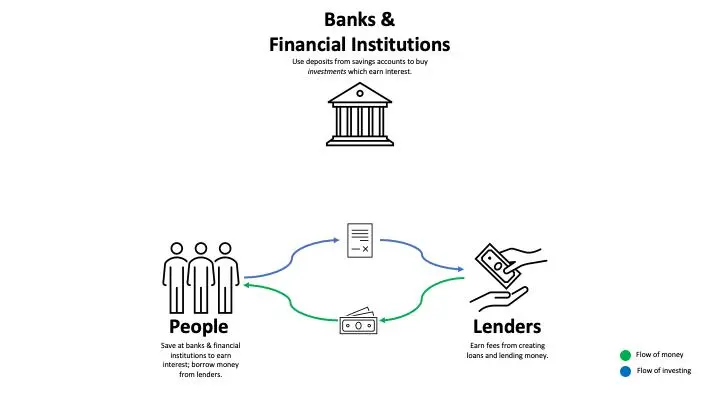
Government policies, regulations, and interest rates also influence financial activity. Together, these different components allow money and capital to move through the economy and support saving, borrowing, investment, and economic activity.
Why Is Finance Important?
Finance is important because money affects decisions at nearly every level of society. Individuals use financial resources to pay for everyday needs and plan for future goals. Businesses rely on finance to operate, invest, and manage their resources. Governments use public funds to provide services and support economic activity.
For individuals, financial knowledge can help with decisions about spending, saving, borrowing, and long-term planning. Understanding concepts such as interest, debt, and investment can make it easier to evaluate financial choices and understand their potential costs or benefits.
Finance is equally important for businesses. Companies need money to pay employees, purchase supplies, maintain operations, and pursue opportunities for growth. Financial decisions can influence how a company raises capital, manages cash flow, evaluates investments, and responds to changing market conditions.
Finance also has an important role in the broader economy. Banks and financial markets help direct capital toward individuals, businesses, and governments that need funding. When businesses receive financing, they may use it to expand operations, purchase equipment, develop products, or hire employees.
A functioning financial system therefore supports the movement of capital throughout the economy. Understanding finance provides a foundation for seeing how individual financial decisions connect with larger economic activities.
What Are the Main Areas of Finance?
Finance is a broad field made up of several related areas. Although these areas share fundamental ideas such as money management, risk, return, and time, they focus on different types of financial decisions.
The three major areas are personal finance, corporate finance, and public finance.
Personal finance focuses on how individuals and households manage their financial resources. It includes areas such as income, spending, saving, borrowing, insurance, and long-term financial planning. Decisions about managing household money are examples of personal finance.
Corporate finance focuses on financial decisions made by businesses. Companies need to determine how to raise capital, where to invest money, how to manage cash flow, and how to balance financial opportunities with risk. Decisions involving business expansion, financing, acquisitions, and capital investment fall within corporate finance.

Public finance deals with how governments collect and use financial resources. Taxation, government spending, public debt, and budgeting are important parts of public finance.
Finance also contains specialized fields, including investment management, banking, insurance, international finance, and financial analysis. These areas apply financial principles to specific activities and institutions.
Although the applications differ, these fields are connected by a common purpose: making decisions about limited financial resources while considering objectives, risks, and future outcomes.
What Is Personal Finance?
Personal finance refers to how individuals and households manage their money and financial resources. It includes the decisions people make about earning income, controlling expenses, saving money, managing debt, protecting assets, and preparing for future needs.
Budgeting is one of the basic components of personal finance. A budget helps a person understand how much money comes in and how that money is allocated among necessities, discretionary spending, savings, and other financial priorities. Having this overview can make it easier to identify spending patterns and manage available income.
Saving is another important part of personal finance. People may save money for emergencies, short-term purchases, education, housing, retirement, or other future goals. Keeping some funds accessible can also provide a financial cushion when unexpected expenses arise.
Investing is related to personal finance but serves a different purpose from ordinary saving. Investing involves putting money into assets with the expectation of earning a return over time. Examples include stocks, bonds, mutual funds, and other investment products. Investments can fluctuate in value, so they involve different levels of risk.

Personal finance also includes understanding borrowing and debt. Credit cards, loans, and mortgages allow people to access money before they have accumulated enough funds to pay for something entirely themselves, but borrowing generally comes with costs such as interest.
Overall, personal finance is about managing available resources in a way that supports both current needs and future financial goals.
What Is Corporate Finance?
Corporate finance is the area of finance concerned with how businesses raise, manage, and allocate money. It helps companies make financial decisions related to operations, investment, financing, and long-term growth.
One major part of corporate finance is determining how a business should obtain capital. Companies can use sources such as retained earnings, loans, bonds, or equity financing. Debt financing generally creates an obligation to repay borrowed funds with interest, while equity financing involves providing investors with an ownership interest in the company.

Corporate finance also involves deciding how available money should be invested. A company may need to evaluate whether purchasing new equipment, developing a product, opening a new location, or acquiring another business is financially worthwhile. These decisions usually involve comparing expected benefits with costs and risks.
Cash-flow management is another essential area. A business needs sufficient cash to pay employees, suppliers, lenders, rent, taxes, and other expenses when they become due. Revenue and expenses do not always occur at the same time, so managing cash availability is important even when a company is profitable.
Businesses also use financial analysis to evaluate performance and support decision-making. Financial statements, budgets, forecasts, and other financial information can help management understand the company’s financial position.
In simple terms, corporate finance helps businesses decide where money should come from, where it should go, and how financial resources can be managed responsibly.
What Is Public Finance?
Public finance focuses on how governments manage financial resources at the national, regional, or local level. It examines how governments collect revenue, allocate spending, manage debt, and make financial decisions that affect public services and economic activity.
Taxation is one of the primary ways governments raise revenue. Depending on the country and its tax system, governments may collect income taxes, sales or consumption taxes, corporate taxes, property taxes, and other forms of revenue.
Governments use these resources to fund public services and programs. Spending can include areas such as infrastructure, education, healthcare, public safety, administration, and social programs. Because government resources are limited, decisions about how funds are allocated involve competing priorities.
Public finance also includes government borrowing. When government spending exceeds revenue, a government may borrow to finance the difference, often by issuing debt securities. Government debt creates future repayment obligations and therefore becomes an important part of public financial management.

Fiscal policy is another component of public finance. Governments can change taxation and public spending in response to economic conditions and policy objectives. Such decisions can influence overall demand, employment, investment, and economic activity.
Public finance therefore extends beyond government accounting. It concerns how public resources are collected, allocated, and managed and how those decisions affect communities and the economy.
What Is Financial Management?
Financial management is the process of planning, organizing, monitoring, and controlling financial resources to achieve specific objectives. It can apply to individuals, businesses, nonprofit organizations, and other entities.
The process generally begins with identifying financial goals. An individual might want to build savings or prepare for a major purchase, while a business might want to maintain sufficient cash flow or finance an expansion. Clear objectives provide a basis for deciding how available resources should be used.
Financial management also involves allocating resources among different priorities. Since financial resources are limited, decisions often require balancing immediate expenses with future objectives.
Monitoring financial performance is another important part of the process. Individuals may review income, expenses, savings, and debt. Businesses may monitor revenue, operating costs, cash flow, profitability, and financial obligations.
Risk management is also closely connected to financial management. People and organizations can face unexpected expenses, changes in income, market fluctuations, or other financial risks. Measures such as maintaining emergency reserves, using appropriate insurance, and diversifying investments can help manage certain types of risk.
For businesses, financial management can include budgeting, financial forecasting, capital allocation, working-capital management, and financial reporting.
Ultimately, financial management turns financial information and goals into practical decisions. It helps ensure that money is deliberately allocated, monitored, and adjusted as circumstances change.
What Are Financial Markets?
Financial markets are systems and platforms where financial assets are bought and sold. They connect participants who want to invest or raise capital and help facilitate the movement of money through the financial system.
The stock market is one familiar example. Companies can raise equity capital by issuing shares, while investors can buy and sell those shares. The price of a stock can change based on factors such as company performance, economic conditions, investor expectations, and market demand.
Bond markets operate differently. Bonds represent debt instruments through which governments or companies can borrow money from investors. In return, investors generally receive interest payments and repayment of the principal according to the terms of the bond.
Foreign exchange markets allow currencies to be bought and sold. These markets support international trade, travel, investment, and other activities that require currencies to be exchanged.
Commodity markets provide another example, allowing participants to trade commodities such as energy products, agricultural goods, and metals.

Financial markets perform several important functions. They can help businesses and governments raise capital, provide investors with opportunities to buy and sell assets, and contribute to the process of determining asset prices.
Although different financial markets operate in different ways, they all help connect capital providers with those seeking financial resources.
What Are Financial Institutions?
Financial institutions are organizations that provide financial services and help facilitate the movement, storage, lending, investment, and management of money. They serve individuals, businesses, governments, and other organizations.
Banks are among the most familiar financial institutions. They provide services such as deposit accounts, payment services, and loans. Individuals may use banks to store money and make payments, while businesses may use them for financing and other financial services.
Credit unions are another type of financial institution. They typically operate as member-owned organizations and provide services such as savings accounts and loans.
Insurance companies perform a different financial function. They collect premiums from policyholders and provide financial protection against specified risks covered by insurance policies.
Investment firms and brokerages provide services that help investors access financial markets. Depending on the institution, these services may include buying and selling securities, investment management, and financial research.
Central banks have a distinct role within national financial systems. They generally conduct monetary policy, oversee aspects of the banking system, and influence financial conditions through tools such as policy interest rates.
Financial institutions therefore form an important part of the infrastructure through which people and organizations save, borrow, invest, transfer, and manage money.
What Are Financial Assets?
Financial assets are economic resources that generally represent a claim to money, ownership, or another financial benefit. Unlike physical assets such as buildings or vehicles, financial assets are usually based on contractual rights or ownership claims.
Cash is a basic example of a financial asset because it provides immediate purchasing power. Bank deposits are also financial assets from the account holder’s perspective because they represent a claim on the bank for the deposited funds.

Stocks represent ownership in a company. When someone owns shares, they hold an equity interest in that business and may receive benefits such as dividends or potential increases in the value of their shares, depending on the company’s performance and market conditions.
Bonds are another common financial asset. A bond generally represents money lent to a government, company, or other issuer. The investor may receive interest and repayment of the principal according to the bond’s terms.
Other financial assets include mutual funds, exchange-traded funds, and certain retirement investments. These products may hold portfolios containing different underlying assets.
The value and characteristics of financial assets vary considerably. Some may be relatively stable, while others can experience significant price fluctuations. Understanding what an asset represents, how it generates potential returns, and what risks it carries is an important part of financial literacy.
What Are Financial Liabilities?
Financial liabilities are obligations to pay money or provide an economic benefit to another party. In simple terms, a financial liability represents something that an individual, business, or government owes.
For individuals, common liabilities include credit card balances, personal loans, auto loans, student loans, and mortgages. When someone borrows money, the amount owed becomes a liability that must generally be repaid according to agreed terms.
Businesses can have many types of liabilities. These may include bank loans, bonds issued to investors, accounts payable to suppliers, taxes owed, and other financial obligations. Businesses need to monitor these obligations carefully to ensure they have enough resources to meet payments when they become due.

Governments also carry liabilities, particularly through public debt. Bonds and other forms of government borrowing create obligations that must be managed over time.
Having a liability is not automatically a sign of poor financial management. Borrowing can provide access to resources that may support useful activities, such as purchasing a home, financing education, or investing in business operations. However, borrowing creates repayment obligations and may involve interest or other costs.
The important distinction is between assets, which represent resources or financial claims, and liabilities, which represent obligations. Understanding both helps provide a clearer picture of an individual’s or organization’s overall financial position.
What Is the Role of Money in Finance?
Money plays a central role in finance because it provides a common way to exchange, measure, and store economic value. Financial decisions depend on being able to compare resources and transactions using a generally accepted form of payment and measurement.
One of money’s main functions is serving as a medium of exchange. Instead of exchanging one product directly for another, people can use money to purchase goods and services. This makes economic transactions more efficient.
Money also acts as a unit of account. Prices, wages, revenues, expenses, assets, and liabilities can all be expressed in monetary terms. This provides a common standard for comparing different financial activities.
Another function is serving as a store of value. Money can be held for future use, although its purchasing power can change over time because of factors such as inflation.
These functions make money essential to saving, borrowing, lending, investing, and financial planning. For example, someone can save money today and use it later, while a business can borrow money to finance an investment expected to generate future revenue.
Finance therefore depends heavily on money as a tool for measuring and transferring economic value across time. Understanding the role of money helps explain why financial decisions involve not only amounts, but also timing and purchasing power.
What Is the Relationship Between Risk and Return?
Risk and return are closely connected concepts in finance. Return refers to the gain or loss associated with a financial asset or investment, while risk refers to the uncertainty surrounding its future outcome.
Generally, investments with greater potential returns tend to involve greater uncertainty or potential for loss. Lower-risk assets may provide more predictable outcomes but often have lower potential returns. This relationship is an important principle when evaluating financial opportunities.
For example, a savings account may provide interest with relatively low risk of losing the deposited principal, depending on the account and applicable protections. An investment in stocks can potentially produce higher returns over the long term, but stock prices can also fall and investors can lose money.
Risk can come from many sources. Market prices may change, borrowers may fail to repay debt, interest rates may move, currencies may fluctuate, or a company’s financial performance may deteriorate.
The appropriate level of risk depends on factors such as financial goals, time horizon, available resources, and an individual’s ability to withstand losses. This is why the same financial product may not be suitable for every person or situation.
Understanding risk and return doesn’t mean that higher risk automatically produces higher actual returns. Rather, it means that investors generally face greater uncertainty when pursuing investments with higher potential returns.
This relationship is one of the fundamental ideas used to understand investment decisions and financial markets.
What Is the Time Value of Money?
The time value of money is the financial principle that money available today can have greater economic value than the same nominal amount received in the future, because money available now can potentially be saved, invested, or used for other purposes.
Consider receiving $1,000 today versus receiving $1,000 one year from now. If you receive the money today, you could potentially place it in an interest-bearing account or invest it and earn a return before the year ends. The future $1,000 would not provide that opportunity during the waiting period.
This principle helps explain why interest is charged on loans. When a lender provides money today, the lender gives up the opportunity to use or invest that money elsewhere. Interest compensates the lender according to the terms and risks of the loan.

The time value of money is also important for saving and investing. Money invested earlier generally has more time to potentially earn returns, which can contribute to growth through compounding.
The concept is used in many areas of finance, including loan calculations, investment analysis, business decisions, and financial planning. More advanced financial analysis may use concepts such as present value and future value to compare cash flows occurring at different points in time.
Understanding the time value of money helps explain why when money is received or paid can be almost as important as how much money is involved.
What Is Financial Planning?
Financial planning is the process of identifying financial goals and creating a strategy for managing money and resources to work toward those goals. It provides a structured way to think about present financial circumstances and future needs.
The process often starts by identifying specific objectives. An individual might want to build an emergency fund, purchase a home, pay for education, or prepare for retirement. A business might have goals related to expansion, equipment purchases, or maintaining sufficient operating capital.
After establishing goals, financial planning involves assessing the current financial situation. This can include reviewing income, expenses, savings, investments, debt, and other financial resources and obligations.
A plan can then be developed to connect the current situation with future objectives. Depending on the circumstances, this may involve budgeting, saving, investing, debt management, insurance, or other financial strategies.
Financial planning also needs to account for uncertainty. Unexpected expenses, changes in income, market movements, and other events can affect progress toward financial goals. For this reason, a financial plan should be reviewed periodically rather than treated as a permanent document.
For businesses, financial planning can include budgets, cash-flow forecasts, capital planning, and financial projections.
Ultimately, financial planning provides a framework for making deliberate financial decisions instead of dealing with every money-related issue separately as it appears.
How Does Finance Affect Individuals?
Finance affects individuals through everyday decisions as well as major life events. Income, expenses, saving, borrowing, and financial planning all influence how people manage their available resources.
Daily financial decisions can include choosing how much to spend, how much to save, whether to use credit, and how to prioritize different expenses. Understanding these choices can help individuals see the relationship between current spending and future financial goals.
Finance also becomes particularly important during major milestones. Purchasing a home, paying for education, starting a business, preparing for retirement, or managing a significant unexpected expense can all involve financial decisions.
Borrowing is another area where finance affects individuals. Loans and credit can provide access to resources earlier, but repayment schedules, interest costs, and other terms affect the total financial obligation.
Saving and investing can influence longer-term financial outcomes as well. Saving can provide funds for short-term needs, while investing may provide an opportunity for longer-term growth but also introduces investment risk.
Financial circumstances can also affect a person’s flexibility when unexpected events occur. Having accessible savings or manageable financial obligations may make it easier to respond to certain expenses or changes in income.
Overall, finance influences how individuals allocate limited resources across present needs and future goals. Developing financial knowledge can help people understand the consequences and trade-offs associated with different financial decisions.
How Does Finance Affect Businesses?
Finance is involved in nearly every major business decision, from paying everyday expenses to funding long-term expansion. A business needs financial resources to operate, manage obligations, invest in opportunities, and respond to changing conditions.
Day-to-day operations require careful financial management. Companies may need to pay employees, suppliers, landlords, lenders, and service providers while waiting for customers to pay invoices. Managing cash flow helps businesses maintain sufficient funds to meet these obligations.
Finance also affects business growth. When a company considers opening a new location, purchasing equipment, developing a product, or entering a new market, it must evaluate the expected costs and potential financial benefits.
Businesses may fund these activities using retained earnings, loans, bonds, or investment from owners and shareholders. Each source of financing has different costs, obligations, and implications for the company.

Financial information also helps businesses measure performance. Companies can use financial statements, budgets, cash-flow reports, and forecasts to evaluate revenue, expenses, profitability, assets, and liabilities.
Finance can also help businesses prepare for uncertainty. Changes in customer demand, operating costs, interest rates, or economic conditions can affect a company’s financial position. Maintaining appropriate financial controls and planning can help businesses respond to such changes.
In this way, finance supports both the daily operation and long-term decision-making of a business. It provides the information and framework needed to allocate limited resources while considering costs, opportunities, and financial risks.
How Does Finance Affect the Economy?
Finance plays an important role in an economy because it helps move money and capital between savers, borrowers, investors, businesses, and governments. These financial flows can influence investment, consumption, business activity, and economic development.
One important connection is lending. Banks and other financial institutions provide financing to individuals and businesses. A business may borrow money to purchase equipment or expand its operations, while an individual may use financing to purchase a home or fund another major expense.
Financial markets also help direct capital. Companies can raise funds from investors by issuing stocks or bonds, while governments can borrow through debt markets. The availability and cost of financing can influence whether businesses and governments proceed with different projects.
Interest rates are another important connection between finance and the economy. Changes in interest rates can affect the cost of borrowing and the potential returns available from saving or investing. These changes can influence spending and investment decisions.
Financial problems can also spread beyond individual institutions. Excessive borrowing, weak risk management, or disruptions in financial markets can affect businesses, employment, consumer spending, and economic activity.
Governments and central banks therefore pay close attention to financial conditions. Policies involving taxation, government spending, interest rates, and financial regulation can influence how the financial system operates.
Finance does not determine every economic outcome, but it is an important mechanism through which money, credit, investment, and risk move throughout an economy.
What Are the Most Common Finance Terms?
Learning basic finance terminology makes it easier to understand financial discussions, reports, news, and everyday money decisions. Many common terms describe simple ideas once their meaning is clear.
Interest is the cost of borrowing money or the amount earned for lending or depositing money, usually expressed as a percentage.
Inflation refers to a sustained increase in the general level of prices over time. When prices rise, the purchasing power of a fixed amount of money generally decreases.
Asset refers to something of economic value that an individual or organization owns or has a financial claim to. Examples include cash, property, investments, and certain accounts.
Liability refers to a financial obligation owed to another party, such as a loan, mortgage, or unpaid bill.
Net worth is generally calculated by subtracting total liabilities from total assets. It provides a basic picture of financial position.
Equity can refer to ownership interest in an asset or company. In corporate finance, equity financing involves raising money by providing investors with an ownership interest.
Debt refers to money borrowed that must generally be repaid according to agreed terms.
Liquidity describes how easily an asset can be converted into cash without a significant loss in value.
Diversification means spreading investments across different assets or categories rather than concentrating everything in one place. It is commonly used as a way to manage investment risk.
Understanding these terms provides a useful foundation for learning more advanced financial concepts.

How Can Beginners Learn the Basics of Finance?
Learning finance as a beginner doesn’t require mastering complicated formulas from the beginning. A better starting point is to understand the fundamental concepts and gradually connect them to real financial situations.
Personal finance can provide a practical entry point because it relates directly to everyday activities such as earning, spending, saving, and borrowing. Tracking income and expenses can help beginners understand how money moves through their own financial lives.
Next, it can be useful to learn basic concepts such as interest, inflation, assets, liabilities, risk, return, and the time value of money. These ideas appear repeatedly across different areas of finance.
Reading reliable educational material can help build knowledge without making the subject unnecessarily complicated. Beginners can start with introductory resources and gradually move toward more specialized subjects such as investing, financial markets, corporate finance, or economics.
Practical learning can also reinforce theoretical concepts. Creating a simple budget, comparing the terms of different financial products, or using a practice investment account can make abstract ideas easier to understand.
It is also important to distinguish financial education from personalized financial advice. Learning how financial concepts work is useful, but individual financial decisions depend on circumstances such as income, goals, risk tolerance, and local regulations.
Finance is a broad subject, so beginners don’t need to learn everything at once. Building knowledge step by step creates a stronger foundation and makes more advanced financial topics easier to understand.
Conclusion
Finance is much more than numbers, bank accounts, or investment markets. It is the system through which individuals, businesses, and governments manage money and make decisions about financial resources. From personal budgeting and borrowing to corporate financing and government spending, finance influences decisions at almost every level.
Understanding the basics of finance makes it easier to see how money moves, how financial decisions involve risk and time, and why planning matters. Concepts such as assets, liabilities, financial markets, interest, risk and return, and the time value of money provide a foundation for understanding more advanced financial topics.
You don’t need to become a financial professional to benefit from financial knowledge. Learning the fundamentals and applying them carefully to real-world situations can help you better understand the financial choices that affect everyday life.
Finance is a broad subject, but it becomes much easier to understand when its major concepts are learned step by step. Once the fundamentals are clear, topics such as investing, banking, economics, and financial planning become easier to explore in greater depth.
Frequently Asked Questions About Finance
What is finance in simple words?
Finance is the management and study of money and financial resources. It involves how individuals, businesses, and governments earn, spend, save, borrow, invest, and plan for the future.
What are the three main types of finance?
The three broad areas of finance are personal finance, corporate finance, and public finance. Personal finance focuses on individuals and households, corporate finance focuses on businesses, and public finance focuses on government financial activities.
Why is finance important?
Finance is important because it helps individuals, businesses, and governments manage limited financial resources. It supports decisions involving spending, saving, borrowing, investment, budgeting, and long-term planning.
What is the difference between finance and accounting?
Finance focuses largely on financial decision-making, planning, investment, funding, and managing financial resources. Accounting focuses on recording, organizing, reporting, and analyzing financial transactions and information.
Can beginners learn finance without studying it professionally?
Yes. Beginners can learn the fundamentals of finance through reliable educational resources, practical exercises, and consistent study. Basic concepts such as budgeting, interest, assets, liabilities, risk, and return provide a useful starting point.