

Think about your morning routine for a moment. You grab a coffee from the corner café, pick up groceries from a supermarket, order a pair of shoes online, and maybe call a local plumber to fix a leaking tap. Each of these activities involves a different kind of business, and each business operates in its own way. So, What Are the Main Types of Business? The answer depends on how a business is classified.
Businesses can be classified in several ways, including ownership, legal structure, activities, products, services, and operating models. A business owned by one person is very different from a corporation owned by thousands of shareholders, while a company that sells products operates differently from one that provides professional services.
Some common business structures include sole proprietorships, partnerships, corporations, LLCs, cooperatives, franchises, and nonprofit organizations. Businesses can also be described by what they do, such as service-based, product-based, manufacturing, retail, wholesale, and online businesses. In practice, one company can fit into several categories at the same time.
Understanding these differences is useful for entrepreneurs, students, and anyone interested in business. It can help you understand how companies are organized, how they operate, and why different businesses choose different structures.
In this article, we will explore the main types of business in simple language, including their characteristics, advantages, limitations, and examples.
What Is a Sole Proprietorship?
A sole proprietorship is one of the simplest business structures. It is owned and operated by a single person, who is responsible for managing the business and making its major decisions. In many jurisdictions, it can be relatively easy and inexpensive to establish, although registration, licensing, and tax requirements vary by location.
The owner generally receives the business profits and is responsible for its losses and obligations. This structure is common among freelancers, tutors, consultants, small shop owners, tradespeople, and home-based sellers. For example, a tailor who operates a small shop independently may run the business as a sole proprietorship.
One major advantage is full control. The owner does not have to consult partners or shareholders before making everyday decisions. Startup costs can also be relatively low, and the business may require less administrative work than more complex structures.
However, there is an important limitation: personal liability. In many jurisdictions, the business and owner are not legally separate, meaning the owner’s personal assets may be exposed to certain business debts or claims.
A sole proprietorship can work well for small, low-risk businesses, but an owner may eventually choose a different structure as the business grows.

What Is a Partnership Business?
A partnership is a business owned by two or more people who agree to share responsibilities, profits, and losses. Partners can combine their money, skills, experience, and time, allowing them to accomplish things that might be difficult for one person alone.
Partnerships are common in professional practices, family businesses, consulting firms, and other ventures where multiple people contribute to the operation. For example, two friends opening a bakery might divide responsibilities, with one managing production while the other handles sales, marketing, and accounts.
Partners usually create a partnership agreement that explains important matters such as each person’s contribution, ownership percentage, profit-sharing arrangement, decision-making responsibilities, and what happens if someone leaves the business. A clear agreement can reduce misunderstandings and disputes.
Different forms of partnership exist, and the exact rules depend on the jurisdiction. In a general partnership, partners may have significant personal responsibility for business debts. Limited partnerships can provide different roles and liability arrangements for different partners.
The main advantages include shared responsibilities, combined resources, and a wider range of skills. The disadvantages can include disagreements, shared liability, and the need to divide profits.
A partnership works best when the partners have compatible goals, communicate clearly, and understand their responsibilities.
What Is a corporation?
A corporation is a business structure that is generally treated as a separate legal entity from its owners. This means the corporation can own property, enter contracts, borrow money, and face legal claims in its own name.
The owners of a corporation are usually called shareholders, because they own shares representing an interest in the company. Shareholders typically do not manage the company’s daily activities themselves. Instead, a board of directors and company executives oversee major decisions and operations.
Corporations can be privately held or publicly traded, depending on the structure and laws of the jurisdiction. Large companies such as Apple, Toyota, and Coca-Cola are well-known examples of corporations.
One major advantage is limited liability. Generally, shareholders are not personally responsible for the corporation’s debts simply because they own shares. Corporations can also raise substantial capital by issuing shares and can continue operating even when ownership changes.
However, corporations are usually more complex to establish and maintain than simpler business structures. They may involve more paperwork, reporting requirements, legal costs, and administrative responsibilities. Tax treatment also varies by country, and some corporate structures can result in taxes at both the company and shareholder levels.
Corporations are often suitable for businesses that expect significant growth, outside investment, or a more formal organizational structure.

What Is a Limited Liability Company (LLC)?
A limited liability company, commonly called an LLC, is a business structure available primarily in the United States and some other jurisdictions. It combines certain features associated with corporations and simpler business structures.
An LLC is generally treated as a separate legal entity, which can provide owners with protection from certain business liabilities. The owners are usually called members. An LLC may have one member or multiple members, and the members can often manage the business themselves or appoint managers.
One of the attractive features of an LLC is its flexibility. Depending on applicable laws and elections, an LLC may receive different tax treatments. In the United States, for example, many LLCs use pass-through taxation, meaning business income is generally reported on the owners’ tax returns rather than being taxed separately at the company level. However, tax rules vary and some LLCs can choose different tax classifications.
LLCs are commonly used by consultants, freelancers, agencies, online businesses, real estate ventures, and other small or growing companies in the United States.
The benefits can include liability protection, management flexibility, and fewer formal requirements than some corporations. On the other hand, LLCs can involve formation fees, annual filings, and other compliance obligations.
Because LLC rules are not the same everywhere, anyone considering this structure should check the laws and tax requirements in their own jurisdiction.
What Is a Cooperative Business?
A cooperative, often called a co-op, is an organization owned and operated by members who share a common economic or social purpose. The members may be customers, employees, producers, farmers, or other participants who benefit from the cooperative.
Unlike a traditional company focused primarily on returns to outside investors, a cooperative is generally designed to meet the shared needs of its members. Members may benefit through better prices, access to markets, shared services, or other advantages.
Many cooperatives follow a democratic approach in which members have voting rights in important decisions. The exact governance and distribution of surplus depend on the cooperative’s structure and local laws.
There are several types of cooperatives. Consumer cooperatives are owned by customers, while worker cooperatives are owned by employees. Producer cooperatives allow producers, such as farmers, to work together to purchase supplies, process goods, or market products. Credit unions are another example of member-owned cooperative organizations.
A well-known example is Amul in India, which is built around dairy producers working together through a cooperative system.
Cooperatives can provide members with stronger bargaining power and shared resources. However, decision-making can sometimes take longer because many members are involved. Raising outside capital may also be more difficult.
Cooperatives are particularly useful when people with shared interests want to work together for mutual benefit.
What Is a Franchise Business?
A franchise is a business arrangement in which one party, known as the franchisee, receives the right to operate using another company’s established brand, products, services, and business system. The company providing those rights is called the franchisor.
Well-known franchise brands include McDonald’s, Subway, and Domino’s. Individual outlets may be operated by independent franchise owners while following the standards and systems established by the parent brand.
Franchisees commonly pay an initial franchise fee and may also pay ongoing royalties or marketing contributions. In return, they can receive benefits such as brand recognition, training, operating guidelines, supplier relationships, marketing support, and an established business model.

One major advantage of franchising is that the entrepreneur does not necessarily have to build a brand and operating system completely from scratch. An established concept may make it easier to attract customers.
However, franchising also comes with limitations. Startup costs can be significant, and ongoing fees can reduce profits. Franchisees generally have to follow the franchisor’s rules regarding branding, products, suppliers, operations, and customer experience. This can give them less freedom than an independent business owner.
Franchising can be found in restaurants, retail, education, fitness, cleaning, automotive services, and many other industries.
Because it is an operating and expansion model rather than simply an ownership structure, a franchise can also overlap with other business categories.
What Is a Nonprofit Organization?
A nonprofit organization is created primarily to pursue a social, charitable, educational, cultural, religious, scientific, or community-focused purpose rather than distribute profits to private owners.
Nonprofits can still generate revenue, employ workers, sell products or services, and operate much like other organizations. The key difference is generally what happens to any surplus. Instead of distributing profits to owners or shareholders, the money is typically used to support the organization’s mission, subject to applicable laws.
Nonprofits may receive funding through donations, grants, membership fees, fundraising activities, sponsorships, or the sale of goods and services. They are often governed by a board of directors or trustees and may use both paid employees and volunteers.
Examples include charities, community organizations, museums, food banks, and some educational and healthcare institutions.
One advantage of nonprofit status, where legally available, can be access to certain tax benefits, grants, donations, or other forms of support. A clear mission can also attract volunteers and supporters.
However, nonprofits often face strict financial, reporting, and governance requirements. Funding can also be unpredictable, making long-term planning challenging.
It is important to remember that nonprofit does not mean no revenue or no salaries. Employees can be paid; the main distinction is that the organization is not established to distribute profits to private owners.
What Is a Service-Based Business?
A service-based business earns revenue primarily by providing skills, expertise, time, or experiences rather than selling physical products. Customers pay for an outcome or service, such as a haircut, repair, consultation, lesson, medical appointment, or design project.
Examples include salons, accounting firms, consulting agencies, cleaning companies, repair services, clinics, tutors, and freelance professionals.
Services are often intangible, meaning customers cannot physically inspect the service before purchasing it. Quality can also depend heavily on the person delivering the service. As a result, reputation, reviews, referrals, communication, and customer experience can be extremely important.
Service businesses can charge in different ways. A freelancer may charge by the hour or project, while a consultant might use a monthly retainer. A software or professional service may operate through a subscription model.
One major advantage is that many service businesses can start with relatively little equipment or inventory. A skilled freelancer, for example, may need little more than a computer, software, internet access, and expertise.
The main challenge is scalability. When income depends directly on someone’s time, there are limits to how much work one person can complete. Growth may require hiring employees, training others, developing systems, or creating products that can be sold repeatedly.
Service-based businesses are therefore a major part of the modern economy and can range from one-person freelance operations to large professional companies.
What Is a Product-Based Business?
A product-based business earns revenue by selling goods that customers can purchase and use. These products may be physical items such as clothing, electronics, furniture, food, or books, or they may be digital products such as software, templates, or online resources.
A product business may design and manufacture its own products, purchase them from suppliers, or combine both approaches. Unlike a service business, its revenue is generally connected to the sale of products rather than directly to the owner’s time.
Product-based businesses need to manage areas such as inventory, storage, packaging, pricing, quality control, and delivery. They must also consider production costs and customer demand.
For example, a small company selling handmade candles must purchase materials, produce consistent products, package them, store inventory, and deliver orders to customers. Its profitability depends partly on the difference between its total costs and selling price.
One advantage is scalability. Once a product and supply chain are established, a business may be able to sell many additional units without increasing labour at the same rate.
However, product businesses can require more upfront investment. Unsold inventory ties up money, while damaged goods, returns, supply problems, and changing customer preferences can create additional costs.
Product-based businesses can operate through physical stores, wholesalers, marketplaces, or online shops, making this category overlap with retail and online business models.
What Is a Manufacturing Business?
A manufacturing business produces goods by transforming raw materials, components, or other inputs into finished products. Manufacturing usually involves organized production processes, equipment, workers, quality control, and supply-chain management.
For example, a furniture manufacturer may transform timber into tables and chairs, while an electronics manufacturer may assemble components into finished devices.
Manufacturing can take different forms. Mass production creates large quantities of standardized products. Batch production produces goods in groups or batches, while custom production creates items according to specific customer requirements.
Manufacturers may sell directly to consumers, but many supply their products to wholesalers, retailers, or other businesses. A textile manufacturer, for instance, may sell fabric to clothing companies rather than directly to shoppers.
A major advantage of manufacturing is the ability to produce goods at scale. Large production volumes can sometimes reduce the cost per unit and allow businesses to build strong brands and supply networks.
However, manufacturing generally requires substantial investment. Businesses may need factories, machinery, raw materials, skilled workers, safety systems, and quality-control processes. They may also have to comply with environmental, labour, and industry regulations.
Manufacturing businesses can therefore be more complex than simple retail or service operations.
Even so, they play an important role in the supply chain because they transform materials and components into the products that eventually reach businesses and consumers.
What Is a Retail Business?
A retail business sells products directly to individual consumers for personal or household use. Retailers are often one of the final stages in the supply chain, connecting products with the people who will use them.
Retail businesses include supermarkets, clothing stores, pharmacies, electronics shops, convenience stores, bookstores, and many online stores.
A retailer typically purchases products from manufacturers or wholesalers and sells them in smaller quantities to customers. The difference between the purchase cost and selling price contributes to the retailer’s gross margin, from which operating expenses and other costs must be covered.
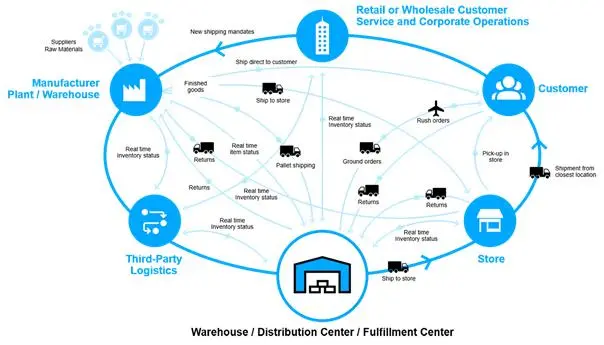
Retail businesses can operate through physical stores, websites, mobile apps, marketplaces, catalogues, or a combination of channels.
Success in retail often depends on factors such as product selection, pricing, location, availability, customer service, convenience, and shopping experience. For example, a neighbourhood grocery store needs to keep popular products available while managing perishable inventory and customer relationships.
One advantage of retail is direct contact with consumers. This gives retailers valuable information about customer preferences and buying behaviour.
However, retailers face challenges such as rent, staffing, inventory management, competition, changing consumer habits, and online competition. Profit margins can also be relatively narrow in some retail sectors.
Retail is therefore an important link between the businesses that produce or distribute goods and the customers who ultimately purchase them.
What Is a Wholesale Business?
A wholesale business purchases goods in relatively large quantities and sells them mainly to other businesses rather than directly to individual consumers. Wholesalers commonly serve retailers, restaurants, hotels, institutions, and other commercial buyers.
Wholesalers occupy an important position in the supply chain. They can connect manufacturers and producers with smaller businesses that may not have the resources or demand to purchase directly from large manufacturers.
The wholesale model often depends on volume. A wholesaler may earn a smaller margin on each unit than a retailer but make money by selling large quantities.
For example, a produce wholesaler may purchase large quantities of fruit and vegetables from farmers and then supply those products to supermarkets, restaurants, and local shops.
Many wholesalers provide more than products. They may offer warehousing, transportation, inventory management, credit terms, and product information. These services can save smaller businesses time and reduce the complexity of purchasing.
The main advantages include repeat business customers, large orders, and potentially lower marketing costs than consumer-facing retail businesses.
However, wholesalers often require significant working capital because they need to purchase and store inventory. Warehouse costs, transportation expenses, supplier reliability, and narrow margins can also create challenges.
Some large retailers now purchase directly from manufacturers, reducing their reliance on wholesalers. Nevertheless, wholesalers remain an important part of many supply chains, particularly where distribution is complex or fragmented.
What Is an Online Business?
An online business operates mainly or entirely through the internet. Instead of depending primarily on a physical storefront, it reaches customers through websites, mobile apps, social media, online marketplaces, or digital platforms.
Online business is not a separate legal structure. Instead, it describes how a business operates and reaches customers. This means an online business can also be a sole proprietorship, corporation, service business, product business, or another type.
Common online business models include e-commerce stores, digital products, online education, freelancing, subscriptions, affiliate marketing, software as a service (SaaS), and online consulting.
For example, someone who sells handmade jewellery through an online store is operating a product-based online business. An online tutor, on the other hand, provides services through the internet.
Most online businesses need a way to attract visitors, communicate with customers, process payments, and deliver either physical products or digital services. Search engine optimization, email marketing, social media, and online advertising can help businesses reach potential customers.

A major advantage is the ability to reach customers beyond a local area without maintaining a traditional storefront. Some online businesses can also operate with relatively low overhead.
However, competition can be intense. Businesses must build customer trust, protect data, manage cybersecurity risks, and deal with technical, payment, or delivery problems.
Online business has therefore become an important operating model across many industries.
How Do You Choose the Right Type of Business?
Choosing the right type of business depends on what you want to achieve, how much money and time you can invest, the level of risk you are comfortable with, and the way you plan to serve customers. There is no single business type that is best for everyone.
Start by considering ownership and control. If you want to operate independently with a simple structure, a sole proprietorship may be appropriate in some situations. If you are working with another person, a partnership or another shared-ownership structure may make more sense. Larger businesses seeking significant outside investment may consider a corporation or another suitable structure.
Next, consider liability, taxes, and legal requirements. Structures such as corporations and LLCs may provide liability protection in applicable jurisdictions, but the exact rules differ by country and state.
Then consider what your business will actually do. Will you provide services, sell products, manufacture goods, distribute products wholesale, sell directly to consumers, or operate primarily online? You may combine several of these categories.
Finally, consider startup costs, licensing, registration, accounting, staffing, technology, and future growth.
Because legal and tax rules vary by location, it is wise to check your local requirements and, when necessary, consult a qualified accountant or legal professional.
The most important point is that your business structure and operating model can often change as your business grows.
Conclusion
Understanding the main types of business becomes much easier once you realize that businesses can be classified in different ways. Some classifications focus on ownership and legal structure, such as sole proprietorships, partnerships, corporations, LLCs, and cooperatives. Others focus on what a business does, such as providing services, selling products, manufacturing goods, wholesaling, retailing, or operating online.
A single company can belong to several categories at the same time. For example, an online clothing store could be a sole proprietorship, a product-based business, a retail business, and an online business.
The right structure depends on factors such as ownership, liability, taxes, investment, business activity, and long-term goals. Understanding these differences can help entrepreneurs make better decisions and help everyone else better understand how businesses operate.
Whether you are planning to start a small business, studying business concepts, or simply trying to understand the companies around you, knowing the different types of business gives you a useful foundation for understanding the wider business world.
Frequently Asked Questions
What are the main types of business?
The main types of business can be classified in different ways. Common business structures include sole proprietorships, partnerships, corporations, LLCs, cooperatives, franchises, and nonprofit organizations. Businesses can also be classified by activity, such as service-based, product-based, manufacturing, retail, wholesale, and online businesses.
What is the simplest type of business to start?
A sole proprietorship is generally one of the simplest business structures to establish because it is owned and operated by one person. However, registration, licensing, taxes, and other requirements vary by country and location.
What is the difference between a product-based and service-based business?
A product-based business earns revenue primarily by selling goods, while a service-based business earns revenue by providing skills, expertise, time, or experiences. For example, a clothing store is product-based, while a consulting firm is service-based.
What is the difference between retail and wholesale businesses?
A retail business generally sells products directly to individual consumers, while a wholesale business typically sells products in larger quantities to other businesses. Wholesalers often supply retailers, restaurants, hotels, and other commercial customers.
Can one business belong to more than one type?
Yes. A business can fit into several categories at the same time. For example, an online clothing store could be a sole proprietorship based on its ownership structure, a product-based business based on what it sells, and a retail and online business based on how it operates.