
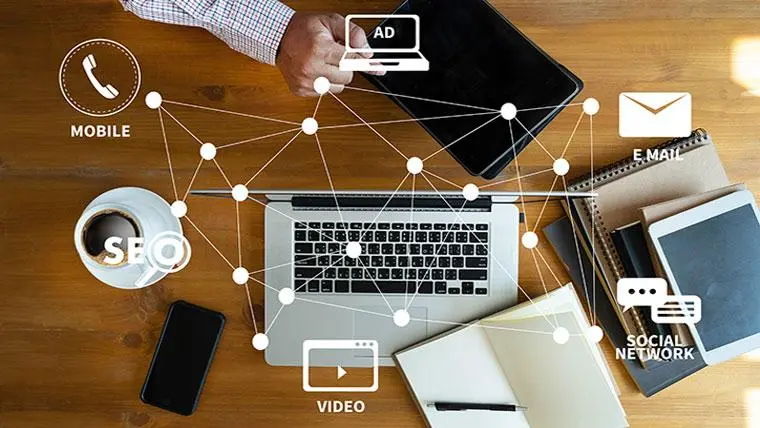
Picture a small bakery that opens its first shop in town. The owner posts photos of fresh pastries on Instagram, sends a weekly email with a coupon to regular customers, and runs a small ad so people searching for “bakery near me” can find the shop. A few local bloggers mention the bakery, and a short baking video gets shared. None of these efforts looks the same, yet each one brings potential customers through a different door.
That is where the question what are the main types of digital marketing becomes important. Digital marketing is not one single method. It is a collection of strategies and channels, with each one designed to serve a different purpose.
Search engine optimization (SEO) and content marketing can help people discover a business through search and useful information. Social media and video marketing can build awareness and encourage engagement. Email marketing can nurture leads and support repeat purchases, while pay-per-click (PPC) advertising can reach people quickly with targeted offers. Affiliate and influencer marketing extend reach through trusted partners and creators, while mobile marketing connects with customers through the devices they use every day. Display advertising and online PR provide additional ways to reach and influence an audience.
Because each type works differently, each can support different goals, including visibility, brand awareness, engagement, lead generation, conversions, and customer retention. Most businesses do not rely on one channel alone. They choose a combination based on their audience, goals, resources, and budget.
In this article, you will learn the main types of digital marketing, how each works, what businesses use them for, and how they can work together.
What Is Search Engine Optimization (SEO)?
Search engine optimization (SEO) is the practice of improving a website so it can become more visible in unpaid search results on Google, Bing, and other search engines. It involves making content and websites easier for search engines to understand while providing useful information that matches what people are looking for.

Businesses use SEO because search can introduce them to people who are actively looking for information, products, or services. Instead of paying for every visitor, a business can attract organic traffic when its pages appear for relevant searches. The main goal is organic visibility, which can support lead generation and sales over time. For additional guidance on improving search visibility, you can refer to Google’s SEO Starter Guide.
In practice, a business researches the topics and phrases its customers search for, creates useful pages around those needs, improves titles and descriptions, organizes its website clearly, and addresses technical issues such as slow loading or broken links. Local businesses can also maintain accurate business information across relevant local platforms.
Consider a neighbourhood dental clinic that creates useful pages explaining its services and answers common patient questions. Someone searching for “teeth whitening near me” may discover the clinic while researching their options.
SEO rarely produces instant results. However, consistent optimization and useful content can build a reliable source of qualified visitors who are already interested in what the business offers.
What Is Content Marketing?
Content marketing is the practice of creating and sharing useful material to attract, educate, and engage a target audience rather than relying only on direct promotional messages. Content can include blog posts, guides, case studies, eBook’s, podcasts, videos, and other resources.

Businesses use content marketing to answer customer questions, demonstrate expertise, build credibility, and attract visitors over time. Good content can also support other channels by giving businesses useful material to share through search, social media, email, and other platforms.
In practice, a business identifies the questions and problems its audience has, creates content that addresses those needs, and organizes that content so readers can move toward a relevant product, service, or sign-up page. Some businesses also offer downloadable resources in exchange for an email address.
Think of an accounting software company that publishes a practical guide to small-business tax deadlines. Freelancers who read it receive useful information, become familiar with the company, and may later consider its software when they need help managing invoices or finances.
The result can be steady traffic, stronger authority and trust, and a growing pool of prospects who already understand the business before entering a sales conversation.
What Is Social Media Marketing?
Social media marketing uses platforms such as Instagram, Facebook, LinkedIn, TikTok, and X to share content, communicate with audiences, build communities, and promote products or services. It can include organic posts, conversations, short-form content, and paid social advertising.

Businesses commonly use social media for brand awareness and engagement because these platforms provide opportunities to interact directly with audiences. They can also use social platforms to collect feedback, answer questions, promote products, and send visitors to websites or online stores.
In practice, a business chooses the platforms where its target audience is active, develops a content schedule, publishes photos, videos, stories, or other relevant material, and responds to comments and messages. Businesses can then review available analytics to understand which content generates attention and interaction.
Imagine a neighbourhood café that shares behind-the-scenes videos, announces a seasonal drink, and responds to customer questions in the comments. Followers begin recognizing the café, tagging friends, and visiting the shop.
The likely result is greater reach, stronger brand recognition, and a community that is more familiar with the business. Direct sales can happen through social media, but its value often begins with attention and relationship building.
What Is Email Marketing?
Email marketing is the practice of sending messages to people who have agreed to receive communication from a business. It can include newsletters, welcome messages, promotions, product recommendations, order updates, and automated follow-ups.
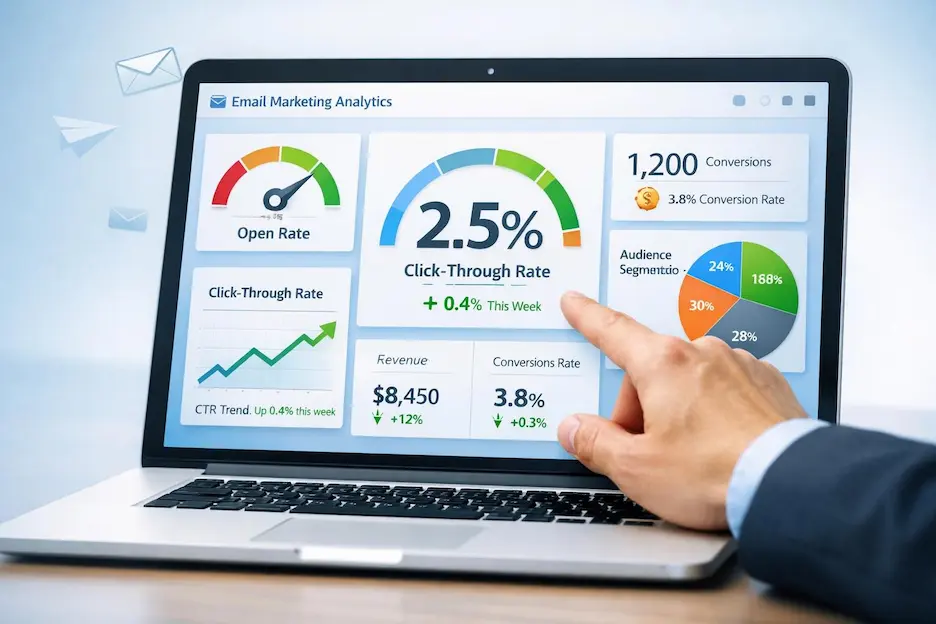
Businesses use email because it allows them to communicate directly with people who have already shown some level of interest. Unlike social platforms, where visibility can depend heavily on changing algorithms, email gives businesses a channel they can manage more directly. It is particularly useful for lead nurturing and customer retention.
In practice, a business collects email addresses through sign-up forms, purchases, or other permission-based methods. It can then divide subscribers into relevant groups, create useful messages, test subject lines, and set up automated sequences such as welcome emails or abandoned-cart reminders.
Picture an online bookstore that sends a welcome discount to a new subscriber, recommends books based on previous purchases, and informs customers when a favourite author releases a new title. Because the messages are relevant, they can provide value instead of feeling like random promotions.
The likely result is stronger customer relationships, repeat purchases, and conversions from people who are already familiar with the business.
What Is Pay-Per-Click (PPC) Advertising?
Pay-per-click (PPC) advertising is a digital advertising model in which a business pays when someone clicks on its advertisement. PPC is commonly used through platforms such as Google Ads and Microsoft Advertising, where advertisers select keywords or audiences and compete for ad placements.

Businesses use PPC because it can provide relatively fast visibility for specific searches or audiences. It can be particularly useful for lead generation and conversions, product launches, seasonal offers, and businesses that need to test demand quickly.
In practice, a business selects relevant keywords or audience criteria, creates advertisements, sets a budget, and sends visitors to a relevant landing page. It then measures metrics such as clicks, click-through rate, cost per click, conversions, and cost per conversion.
For example, a plumbing company might run an advertisement targeting searches for “emergency pipe repair” in its service area. Someone searching for that service may already have an immediate need, giving the advertisement a chance to generate a call or enquiry.
The main advantage is speed and measurability. The limitation is that paid visibility generally stops when advertising spend stops, which makes careful tracking and optimization important.
What Is Search Engine Marketing (SEM)?
Search engine marketing (SEM) refers to marketing activities designed to increase a business’s visibility on search engines, particularly through paid search advertising in the context of this article. It involves planning which searches to target, organizing campaigns, creating relevant advertisements, and measuring performance.
SEM is useful for capturing high-intent search demand because it can place a business in front of people who are actively searching for a product, service, or solution. This makes it particularly relevant to visibility, lead generation, and sales.
In practice, a business groups keywords according to themes and search intent, creates relevant advertisements, selects appropriate targeting, and sends users to landing pages that match their searches. It can also review search-term data to remove irrelevant queries and shift spending toward searches that produce useful results.
Imagine a travel agency promoting winter holiday packages. It creates search campaigns for relevant travel queries and monitors which searches generate enquiries or bookings. Over time, the agency can learn which destinations and offers attract the most valuable customers.
The likely result is immediate search visibility, qualified traffic, and data that can improve future campaigns.
PPC and SEM overlap in many real-world campaigns. A useful distinction is that PPC describes the payment model, while SEM describes the broader search-engine marketing activity surrounding paid search.
What Is Affiliate Marketing?
Affiliate marketing is a performance-based arrangement in which a business rewards partners, known as affiliates, when their promotion leads to a sale, sign-up, or another agreed action. Tracking links or discount codes are commonly used to identify which affiliate generated the result.
Businesses use affiliate marketing because it can extend reach and sales through external partners while tying much of the marketing cost to measurable outcomes. Affiliates may include bloggers, publishers, review websites, comparison sites, or other relevant partners.
In practice, a business establishes commission terms, recruits suitable affiliates or joins an affiliate network, provides product information and tracking links, and monitors clicks, conversions, and other relevant results. Businesses also need to ensure that partners follow applicable advertising and disclosure requirements.
For example, a web-hosting company might work with technology bloggers who publish comparison guides. If a reader clicks an affiliate link and purchases a hosting plan, the blogger receives a commission while the hosting company gains a new customer.
The likely result is additional traffic and conversions through audiences the business may not have reached on its own. However, success depends heavily on selecting relevant and trustworthy partners whose audiences genuinely match the product.
What Is Influencer Marketing?
Influencer marketing involves working with people who have an engaged audience, such as content creators, industry experts, or niche personalities, to introduce or promote a product, service, or brand.

Businesses use influencer marketing to build brand awareness and credibility, reach specific communities, demonstrate products in real-world situations, and encourage engagement. Depending on the campaign, it can also support conversions through links, promotional codes, or direct calls to action.
In practice, a business identifies creators whose audience matches its target customers, agrees on the content to be produced, provides products or payment where appropriate, and measures results such as reach, engagement, website visits, or tracked conversions. Clear disclosure of paid partnerships is also important.
Take a skincare brand that works with several creators who focus on skincare routines. Their reviews and demonstrations introduce the product to people who already have an interest in skincare. A smaller creator may also have a close relationship with a niche audience, making the recommendation feel particularly relevant.
The likely result is greater awareness, social proof, and interested visitors who arrive with a recommendation from someone they already follow.
What Is Video Marketing?
Video marketing uses video content to inform, educate, entertain, or persuade an audience. Common formats include product demonstrations, tutorials, customer stories, webinars, short-form videos, and live streams.

Businesses use video to build awareness and understanding, particularly when showing a product or explaining a complex idea is easier visually than through text. Video can also support engagement on websites, social platforms, video platforms, and other digital channels.
In practice, a business chooses a topic, develops a script or outline, records the video using appropriate equipment, adds captions and a clear call to action, and publishes it where its audience is most likely to watch. It can then review metrics such as viewing time, engagement, shares, and click-throughs.
For example, a home-appliance retailer might publish short videos explaining how to clean and maintain a coffee machine. Someone searching for that solution discovers the video, receives useful information, and becomes familiar with the retailer’s products.
The likely result is stronger engagement, better product understanding, and greater confidence among people who need additional information before making a purchase.
What Is Mobile Marketing?
Mobile marketing reaches customers through smartphones and tablets using channels such as SMS, push notifications, in-app messages, mobile-optimized websites, QR codes, and location-based offers.
Businesses use it to support engagement and customer retention because mobile devices are frequently used for browsing, communication, shopping, and everyday tasks. A well-timed mobile message can encourage an immediate action, such as checking an order, redeeming an offer, or returning to an app.
In practice, businesses make websites easy to use on smaller screens, obtain appropriate permission for messages, segment audiences, and send communication at sensible times. Some businesses also use QR codes to connect physical experiences with online content.
Think of a pizza chain with a mobile application that sends an opted-in customer a lunchtime promotion. The customer opens the app, places an order, and earns loyalty points.
The likely result is quicker customer responses, repeat purchases, and stronger loyalty. However, permission and frequency matter because excessive or irrelevant messages can cause customers to unsubscribe.
What Is Display Advertising?
Display advertising uses visual advertisements such as banners, images, animations, and rich media across websites, applications, and other digital environments.
Businesses often use display advertising for brand awareness because it can introduce a business to people who are not actively searching for its products. It can also support retargeting, allowing businesses to show advertisements to people who have previously visited their website or interacted with their content.
In practice, a business creates advertisements in appropriate sizes, selects audiences and placements, establishes a budget, and measures impressions, clicks, and conversions. Retargeting campaigns can be used to reconnect with visitors who viewed products but did not complete a purchase.
For example, an online shoe store might display advertisements for a new running-shoe collection to relevant audiences on fitness-related websites. A visitor who browsed a particular pair without purchasing may later see a reminder advertisement.
The likely result is broader visibility, repeated brand exposure, and additional opportunities to bring interested visitors back. Because display advertising often serves an awareness role, impressions and audience reach can be important alongside clicks and direct conversions.
What Is Online Public Relations (PR)?
Online public relations (PR) is the use of digital channels to build, maintain, and manage a business’s reputation and relationships with the public. It can involve online publications, digital news coverage, industry websites, interviews, expert commentary, press releases, and other forms of earned media.
Businesses use online PR to increase credibility and public visibility by getting their expertise, achievements, products, or stories in front of relevant audiences. Unlike paid advertising, earned coverage can provide third-party validation when independent publications or organizations choose to mention a business.
In practice, a company identifies newsworthy stories, develops useful information for journalists or publishers, builds relationships with relevant media contacts, and makes experts available for interviews or commentary. Businesses may also monitor online mentions to understand how people and publications discuss their brand.
Imagine a small technology company that develops an energy-saving product. It provides useful data to an industry publication, and the company’s founder is interviewed about energy efficiency. The resulting coverage introduces the business to a relevant audience while providing independent context.
The likely result is greater visibility, stronger reputation, and potential referral traffic. Online PR can also support SEO and brand discovery when reputable publications mention or link to the company.
How Do Different Types of Digital Marketing Work Together?
Different types of digital marketing work best together because customers rarely move from first awareness to purchase through one channel alone. Each method can support a different stage of the customer journey, allowing separate tactics to strengthen one another when they share the same audience, message, and business goal.
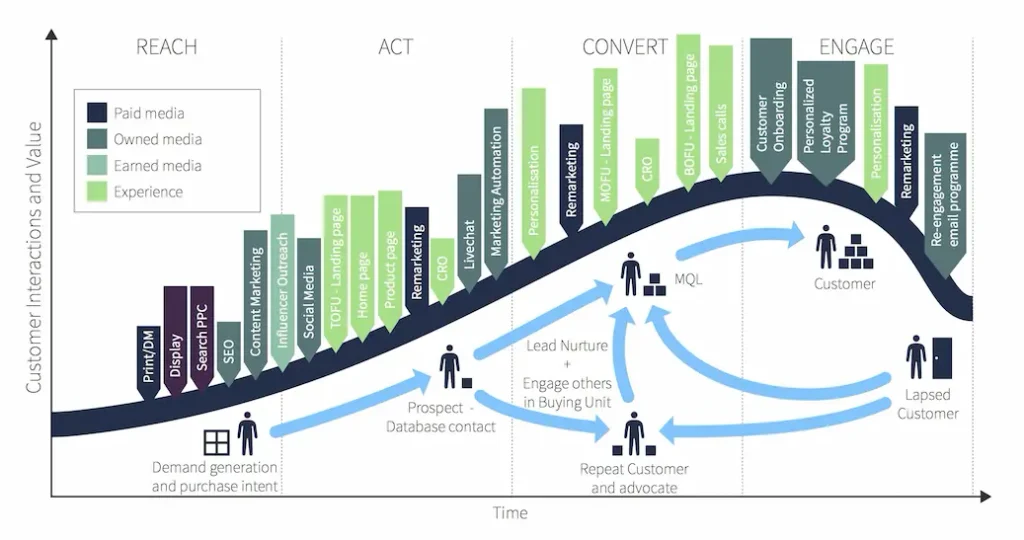
Consider a business selling home fitness equipment. It publishes a detailed buying guide that attracts visitors through SEO and content marketing. A short video based on that guide is shared on social media, introducing the brand to people who may not have searched for it. Visitors who leave without buying can later see display advertisements, while people who download a useful checklist can receive relevant email follow-ups.
Someone ready to purchase a specific product may then discover a search advertisement and return to the website. If the business also works with relevant creators or affiliates, those partners can introduce the products to additional audiences.
This coordination creates a connected marketing funnel rather than a collection of isolated campaigns. Search data can influence content topics, social conversations can reveal customer questions, email performance can show which offers matter, and conversion data can reveal which channels contribute to sales.
The result is a more coordinated customer journey and better information about which combination of channels produces visibility, leads, conversions, and repeat customers.
Which Type of Digital Marketing Is Best for a Business?
No single type of digital marketing is best for every business. The right choice depends on the business goal, target audience, available resources, budget, competitive environment, and how quickly the business needs results.
A business should first identify what it wants to achieve. If the goal is long-term organic visibility, SEO and content marketing may be useful. If the priority is community engagement and awareness, social media and video may be more appropriate. Businesses seeking faster traffic can test PPC, while email marketing can help nurture existing leads and retain customers.
For example, a new local bakery may benefit from local SEO, social media, and email marketing more than from a large national advertising campaign. A software company seeking sign-ups might combine content marketing, search advertising, and email follow-ups. A small business with limited funds could begin with a few focused channels rather than trying to manage every platform at once.
Audience behaviour also matters. Professionals may respond well to LinkedIn, search, webinars, and industry content, while younger audiences may discover products through short-form video and creators.
A practical approach is to choose one or two core channels, establish measurable goals, track results, and expand as the business learns what works. Testing and measurement are more valuable than simply following marketing trends because a channel only matters when it contributes to a meaningful business objective.
Conclusion
Digital marketing is not a single strategy. It is a combination of different channels, and each type serves a different purpose. SEO can help businesses build long-term search visibility, while content marketing provides useful information that attracts and educates potential customers. Social media and video marketing can increase awareness and engagement, while email marketing helps businesses nurture relationships and encourage repeat purchases.
Other methods, including PPC, SEM, affiliate marketing, influencer marketing, mobile marketing, display advertising, and online PR, can support specific goals such as generating traffic, reaching new audiences, building credibility, or increasing conversions.
The most effective approach is rarely about choosing one channel and ignoring everything else. Businesses need to consider their target audience, marketing goals, budget, resources, and customer journey before deciding where to focus. A small business may begin with SEO and social media, while another business may benefit more from paid search or email marketing.
The key is to choose the channels that make sense for the business, measure their performance, and improve the strategy over time. When different types of digital marketing work together, they can create a connected customer journey from discovery and engagement to conversion and retention.
Frequently Asked QUESTION
1. What are the main types of digital marketing?
The main types include SEO, content marketing, social media marketing, email marketing, PPC advertising, SEM, affiliate marketing, influencer marketing, video marketing, mobile marketing, display advertising, and online PR. Businesses may use one or several depending on their goals and audience.
2. Which type of digital marketing is best for beginners?
SEO, content marketing, and social media marketing can be practical starting points for beginners because they can help build visibility and audience engagement over time. The best choice depends on the business, available resources, and marketing goals.
3. What is the difference between PPC and SEM?
PPC is a payment model in which an advertiser pays when someone clicks an advertisement. SEM is a broader term for marketing through search engines, and it can include paid search activities. In practice, PPC is often an important part of SEM.
4. Can a business use multiple types of digital marketing?
Yes. In fact, businesses often combine several channels. For example, a business might use SEO to attract search traffic, content marketing to educate visitors, social media to build awareness, and email marketing to nurture leads or retain customers.
5. How do I choose the right type of digital marketing for my business?
Start by identifying your target audience, business goals, budget, and available resources. Then choose channels that match how your customers discover and evaluate products or services. Track the results and adjust your strategy based on performance.