

Digital marketing has changed significantly over the years. What started with basic websites, simple banner advertisements, and early email campaigns has become a sophisticated marketing ecosystem powered by search engines, social media, mobile technology, artificial intelligence (AI), and data analytics. Today, businesses can connect with customers across multiple digital channels, understand their preferences, and measure the results of their marketing efforts.
In the early days of the internet, businesses mainly used websites to share information about their products and services. As internet access expanded, customers began using search engines to find information, compare products, and make purchasing decisions. Social media later transformed communication between brands and consumers, while smartphones made digital experiences accessible almost everywhere.
These changes have also raised customer expectations. People want helpful information, personalized experiences, quick responses, and convenient ways to purchase products. Businesses must therefore do more than publish advertisements to attract attention.
Understanding how digital marketing has changed over the years helps businesses identify successful strategies, avoid outdated practices, and prepare for future developments. From traditional online advertising to AI-powered campaigns, each stage has introduced new opportunities and challenges.
1. How Has Digital Marketing Changed Over the Years?
The biggest change in digital marketing is the transition from one-way promotion to interactive, data-driven communication. In the past, businesses often published information online and waited for customers to find it. Today, marketers can target relevant audiences, communicate across different platforms, and improve their strategies using measurable results.
Digital marketing has evolved through several important stages:
- 1990s: Businesses established websites and experimented with early online advertisements.
- 2000s: Search engines, email marketing, and online shopping became increasingly important.
- 2010s: Social media, smartphones, online video, and influencer marketing transformed customer engagement.
- 2020s: AI, automation, advanced analytics, and privacy-conscious marketing gained greater importance.
Another major change is accessibility. Small businesses can now build websites, publish educational content, run targeted advertisements, and communicate directly with customers without requiring the resources of a large corporation.
However, greater accessibility has also increased competition. Consumers encounter countless advertisements, videos, articles, and promotional messages every day. Businesses must provide genuine value to stand out.
Modern digital marketing combines creativity, technology, customer research, and performance measurement. Instead of focusing exclusively on visibility, companies need to understand what customers want and how marketing activities contribute to meaningful business outcomes.
2. What Was Digital Marketing Like in the Early Days of the Internet?
Digital marketing began developing rapidly during the 1990s as the commercial internet created new opportunities for businesses to reach audiences online. At that time, websites were relatively simple and primarily served as digital brochures.

Companies typically used their websites to display business information, product descriptions, contact details, and basic images. Online shopping and interactive experiences were less developed than they are today.
Banner advertisements also became an important part of early online promotion. Businesses purchased advertising space on websites to introduce their products and encourage visitors to click through to their pages.
Email marketing developed alongside internet communication. Companies could send announcements, newsletters, and promotional offers directly to people who subscribed to their mailing lists.
Early digital marketing generally focused on establishing an online presence rather than creating complex customer journeys.
For example, a clothing retailer might have created a website showing its latest products, store location, and telephone number. Customers could explore the available items online but might need to visit the store or contact the business to complete a purchase.
The main characteristics of early digital marketing included:
- Basic websites with limited interactive features.
- Banner advertisements displayed on relevant websites.
- Email messages containing announcements and offers.
- Limited opportunities for detailed audience targeting.
- A growing interest in attracting internet users to business websites.
As internet access expanded, businesses realized that online visibility could influence customer decisions. This period established the foundation for the more advanced marketing strategies used today.
3. How Did Search Engines Transform Digital Marketing?
Search engines transformed digital marketing by helping people discover information, products, and services based on their needs. Instead of navigating websites manually, users could enter a search query and explore relevant results.
This development created an opportunity for businesses to attract customers who were already interested in their products or services.
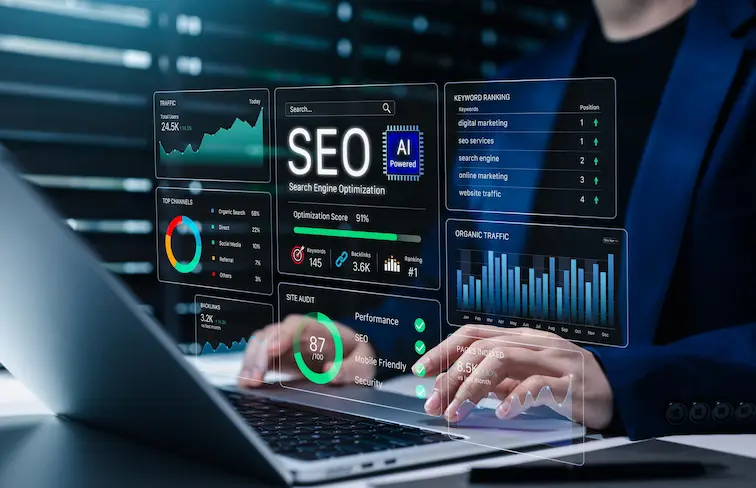
Search engine optimization, commonly known as SEO, became an essential digital marketing discipline. SEO involves improving website content, structure, and usability so search engines can understand pages and present relevant results to users.
For example, a bakery could publish an article explaining how to choose a birthday cake. Someone searching for birthday cake ideas might discover the article, explore the bakery’s products, and eventually place an order.
Paid search advertising introduced another way to reach potential customers. Businesses could pay to display advertisements for relevant searches, helping them attract visitors with specific interests or purchasing intentions.
Modern search marketing involves several important practices:
- Keyword research: Understanding the words and questions people use when searching.
- Helpful content: Creating pages that answer genuine customer questions.
- Technical SEO: Making websites accessible, understandable, and easy to navigate.
- Paid advertising: Reaching relevant audiences through sponsored search results.
- Performance analysis: Evaluating traffic, conversions, and other meaningful outcomes.
Search engine optimization has also evolved. Simply repeating keywords is no longer a reliable strategy for creating useful content. Businesses need accurate information, relevant explanations, clear page structures, and positive user experiences.
Google provides a useful resource in its SEO Starter Guide, which explains fundamental practices for helping search engines understand website content.
Search engines changed marketing by allowing businesses to connect with people who are actively looking for information rather than relying entirely on advertisements to interrupt their attention.
4. How Has Email Marketing Evolved Over Time?
Email marketing has remained an important digital marketing channel, but its methods have become more sophisticated. Early campaigns often involved sending similar promotional messages to large mailing lists.
Businesses used email to announce new products, distribute discounts, share company updates, and encourage customers to visit their websites.
As marketing technology improved, companies gained better tools for organizing subscribers, understanding their interests, and automating communication. Email marketing gradually moved toward segmentation and personalized messaging.
For example, an online bookstore could send business book recommendations to customers interested in professional development while sharing children’s book suggestions with parents who purchase books for young readers.
Automation has made this process more efficient. Businesses can configure emails to be sent after specific customer actions.
Common examples include:
- Welcome emails sent after newsletter subscriptions.
- Order confirmations and delivery updates.
- Follow-up messages after purchases.
- Reminders about abandoned shopping carts.
- Educational emails that help customers use products.
Performance measurement has improved as well. Marketers can evaluate delivery rates, clicks, conversions, unsubscribes, and other indicators to understand campaign effectiveness.
However, email marketing is not simply about sending more messages. Excessive promotional emails can annoy subscribers and damage trust.
Effective campaigns focus on relevance and timing. Businesses should send useful information, respect subscriber preferences, and provide appropriate options for managing subscriptions.
Email marketing has therefore evolved from basic electronic messaging into a more targeted communication channel that supports customer relationships throughout the buying journey.
5. How Did Social Media Change Digital Marketing Strategies?
Social media changed digital marketing by allowing customers to interact directly with brands. Traditional advertising generally delivered messages to audiences, while social platforms enabled people to comment, share opinions, recommend products, and participate in conversations.
Platforms such as Facebook, YouTube, Instagram, LinkedIn, and TikTok created new opportunities for businesses to reach different audiences.

Initially, many companies focused on gaining followers and publishing regular updates. Over time, social media strategies expanded to include paid advertising, influencer partnerships, community management, and detailed performance analysis.
Social media now supports several marketing activities:
- Brand awareness: Introducing products and services to new audiences.
- Customer engagement: Responding to questions, comments, and feedback.
- Paid promotion: Reaching selected audiences through advertising campaigns.
- Influencer marketing: Collaborating with relevant content creators.
- Social commerce: Helping customers discover and purchase products.
Consider a small restaurant that publishes short videos showing how its dishes are prepared. Potential customers might discover the restaurant through a video, read comments from other visitors, and decide whether to visit.
Social media also makes customer experiences more visible. Positive feedback can strengthen a brand’s reputation, while poor service may lead to public complaints.
Businesses must therefore treat social media as a communication channel rather than simply a place to publish advertisements. Responding professionally, providing accurate information, and addressing customer concerns can improve the overall experience.
Another important development is the growth of creator-led content. Relevant creators can introduce products through demonstrations, tutorials, and reviews that help audiences understand how those products work.
However, follower numbers alone do not guarantee sales. Businesses should evaluate audience relevance, engagement quality, and actual campaign results.
Modern social media marketing requires a clear strategy, useful content, and consistent communication. Companies that understand their audiences are better positioned to build meaningful relationships.
6. Why Did Content Marketing Become More Important?
Content marketing became more important as consumers gained access to information and began researching products independently.
Today, people can compare alternatives, read reviews, watch demonstrations, and explore detailed guides before making purchasing decisions. Businesses must therefore provide useful information that helps customers understand their options.
Content marketing involves creating and distributing relevant material to attract and retain a specific audience. Common formats include blog articles, videos, tutorials, case studies, newsletters, and educational resources.
For example, a company selling home security equipment could publish a guide explaining how to improve household security. Readers might learn about common risks, compare available technologies, and explore suitable solutions before considering a purchase.
Useful content can support different stages of the customer journey:
- Awareness: Helping readers understand a problem.
- Consideration: Explaining possible solutions and comparing alternatives.
- Decision: Providing product details, demonstrations, and evidence.
- Retention: Sharing instructions, updates, and helpful customer resources.
Content marketing also supports SEO when it answers genuine questions and provides information relevant to the audience.
However, publishing more articles does not automatically improve search performance. Repetitive content, unsupported claims, and superficial explanations may offer little value.
Google’s guidance on creating helpful, reliable, people-first content explains why content should prioritize readers rather than being produced mainly to manipulate search rankings.
Businesses should focus on accuracy, originality, practical advice, and clear explanations. First-hand experience, credible examples, and relevant expertise can make an article more valuable than a generic overview.
Content marketing has evolved from an optional promotional activity into an important part of digital marketing. It helps businesses answer questions, demonstrate expertise, earn trust, and support purchasing decisions.
7. How Has Mobile Technology Changed Digital Marketing?
Smartphones have transformed digital marketing by making internet access available in more situations throughout the day. Consumers can now search for information, compare prices, watch videos, communicate with businesses, and purchase products from almost anywhere.
This shift has changed how websites and advertising campaigns are designed.
A website that works well on a desktop computer may be difficult to use on a smartphone. Small text, slow loading times, confusing navigation, and complicated checkout processes can discourage potential customers.
Businesses have therefore placed greater emphasis on mobile-friendly design, responsive layouts, and fast-loading pages.
Mobile technology has also changed the context in which people search for products and services. Someone searching for a nearby restaurant may need immediate information, while another person browsing an online clothing store may be researching options for a future purchase.
Important developments in mobile marketing include:
- Responsive design: Websites adapt to different screen sizes.
- Local SEO: Businesses improve visibility in relevant local searches.
- Mobile applications: Customers access services and account features through apps.
- Mobile payments: Purchasing becomes more convenient.
- Location-based marketing: Relevant information can reach customers in appropriate locations, subject to privacy requirements.
Mobile notifications and loyalty programs can also help businesses maintain relationships with customers who choose to use their applications.
However, not every business needs a dedicated mobile app. A well-designed mobile website may be sufficient for many customer needs.
The main lesson is that the customer experience must work effectively on the devices people actually use. Mobile accessibility, readable content, simple navigation, and convenient purchasing options can all influence conversion rates.
As smartphones continue to shape online behavior, mobile optimization remains a core component of modern digital marketing.
8. How Has Video Marketing Changed Consumer Engagement?
Video marketing has evolved from relatively expensive promotional productions into a flexible format that businesses can publish across websites and social media platforms.
In the early days of online video, slower internet connections and limited bandwidth made video content less convenient to distribute. Improvements in connectivity, smartphones, and publishing tools gradually made video more accessible.
Today, businesses use video for product demonstrations, tutorials, customer education, interviews, live events, and short promotional clips.
Video can be particularly useful when customers need to understand how something works. A software company, for example, can demonstrate a feature instead of relying entirely on written instructions.
Short-form video has created additional opportunities for brands to communicate quickly. A short clip can introduce a product, answer a common question, or demonstrate one useful feature.
Longer videos remain valuable when an audience needs detailed instruction or a comprehensive explanation.
Common video marketing formats include:
- Short-form videos: Brief content designed for quick viewing.
- Tutorials: Step-by-step instructions for solving a problem.
- Product demonstrations: Showing features and practical applications.
- Live streaming: Interacting with viewers in real time.
- Customer testimonials: Sharing genuine customer experiences.
However, video views alone do not guarantee business success. A video should be relevant to its audience and support a clear objective.
Marketers can evaluate watch time, audience retention, meaningful interactions, website visits, and conversions to understand performance more effectively.
Accessibility also matters. Captions, readable on-screen text, and clear audio help more people understand the message.
Video marketing demonstrates that successful content does not always require an expensive production budget. Clear explanations, authentic communication, and a strong understanding of customer needs can be more valuable than elaborate visuals without a clear purpose.
9. How Have Data Analytics and Personalization Improved Marketing?
Data analytics has changed digital marketing by allowing businesses to examine how people interact with advertisements, websites, emails, and other marketing channels.
Traditional marketing measurement often relied on surveys, estimates, or delayed sales information. Digital platforms introduced additional ways to track activities such as website visits, advertising clicks, form submissions, and purchases.

These insights help marketers identify opportunities for improvement.
For example, an online store might discover that many visitors view a product but leave before completing checkout. Further investigation could reveal that shipping costs appear too late or that the checkout process contains unnecessary steps.
Instead of immediately increasing advertising spending, the business can test improvements to the website and evaluate the results.
Personalization builds on customer insights by adapting experiences to relevant interests and previous interactions. Businesses may personalize email messages, product recommendations, landing pages, and other content.
Data analytics supports several important marketing activities:
- Segmentation: Grouping audiences according to relevant characteristics.
- Conversion tracking: Measuring actions that support business objectives.
- Campaign optimization: Identifying opportunities to improve performance.
- Customer insights: Understanding preferences and common behaviors.
- Forecasting: Using available data to estimate potential outcomes.
However, more data does not automatically produce better decisions. Inaccurate measurements, incomplete tracking, and poorly defined objectives can lead marketers toward incorrect conclusions.
Privacy restrictions and consent choices can also limit the information available for analysis. Businesses should use appropriate data sources and acknowledge uncertainty when interpreting results.
Useful metrics depend on the objective. A company generating sales leads might prioritize qualified inquiries, while an online retailer might examine conversion rates, customer acquisition costs, revenue, and repeat purchases.
Data analytics has moved marketing beyond intuition alone. The most effective decisions combine reliable evidence, human judgment, and a clear understanding of customer needs.
10. How Has Artificial Intelligence Changed Digital Marketing?
Artificial intelligence has become an important part of modern digital marketing because it can assist with research, content planning, customer service, data analysis, and certain campaign optimization tasks.
Previously, many marketing activities required substantial manual effort. Teams often researched keywords individually, prepared reports manually, and drafted promotional materials from scratch.
AI-powered tools can now help accelerate some of these activities. Generative AI can suggest article outlines, draft alternative advertising messages, summarize research, and assist with content planning.
For example, a small online retailer could use AI to brainstorm product education topics, prepare draft email subject lines, or organize common customer support questions. A marketer could then verify the information and adapt the material to the brand’s audience.
AI can support several marketing functions:
- Content assistance: Generating outlines and initial drafts.
- Customer service: Answering routine questions through chatbots.
- Predictive analytics: Identifying patterns in available data.
- Personalization: Helping tailor relevant messages and recommendations.
- Automation: Reducing repetitive administrative tasks.
Nevertheless, AI has important limitations. Generated content may contain factual errors, unsupported claims, outdated information, or repetitive language.
Businesses should review AI-generated material before publication, particularly when it contains technical information, product claims, or advice that could influence important decisions.
Privacy is another consideration. Companies need to understand how their tools process information and avoid exposing confidential customer or business data unnecessarily.
AI does not eliminate the need for marketing expertise. Instead, it changes how marketers can apply their knowledge. When routine tasks become easier, professionals can devote more attention to strategy, research, creative judgment, and performance evaluation.
The strongest approach combines automation with human oversight. Technology can assist with execution, but people remain responsible for accuracy, originality, ethical judgment, and meaningful customer communication.
11. How Have Influencer Marketing and E-Commerce Evolved?
Influencer marketing and e-commerce have changed how customers discover products, evaluate brands, and make purchasing decisions.
Previously, consumers often visited a retailer’s website directly or searched for a particular product. As social platforms and creator communities expanded, product discovery increasingly occurred through demonstrations, recommendations, reviews, and online discussions.
Influencer marketing involves collaborating with creators whose audiences may be interested in a particular product or service.
For example, a fitness equipment company might work with a trainer who demonstrates how its products can be used in a workout. A skincare brand might collaborate with a creator who explains a product’s intended use while clearly disclosing a paid partnership.
Businesses should evaluate more than follower counts when selecting influencers. Audience relevance, credibility, engagement quality, and campaign performance are also important.
E-commerce has developed alongside these changes. Online stores increasingly provide detailed product descriptions, customer reviews, multiple payment options, order tracking, and convenient delivery choices.
These developments support several marketing opportunities:
- Social commerce: Helping customers discover products through social platforms.
- Affiliate marketing: Rewarding partners for eligible sales generated through tracked referrals.
- Creator partnerships: Introducing products through relevant content.
- Online reviews: Helping customers evaluate other people’s experiences.
- Retargeting: Reaching eligible audiences who previously interacted with a business, subject to applicable privacy rules.
However, strong engagement does not always lead to profitable sales. Businesses must consider product costs, shipping, returns, customer service, and advertising expenses when evaluating campaign performance.
Trust remains essential. Accurate descriptions, transparent sponsorship disclosures, authentic reviews, and dependable service help customers make informed decisions.
Influencer marketing and e-commerce have therefore made the customer journey more connected, allowing discovery, evaluation, purchasing, and post-purchase engagement to work together.
12. How Have Privacy Regulations Changed Digital Advertising?
Privacy has become an increasingly important issue in digital marketing because businesses can collect and analyze information about online interactions.
Many advertising strategies historically relied on tracking technologies and detailed audience profiling. Although these methods supported targeted advertising, they also raised concerns about transparency, consent, and the appropriate use of personal information.
Governments and technology companies have introduced different privacy requirements and tracking restrictions. The exact obligations depend on the applicable jurisdiction, the information involved, and how it is collected and processed.
Businesses must therefore understand that data collection is not simply a technical decision. They need appropriate processes for explaining their practices and respecting customer choices.
First-party data has become increasingly valuable. This refers to information a business collects directly through appropriate interactions with customers, such as purchases, newsletter subscriptions, account preferences, or customer feedback.
For example, an online retailer might ask subscribers whether they prefer product announcements, discounts, or educational content. Their stated preferences can help the business provide more relevant communications.
Privacy-conscious marketing involves several important practices:
- Transparency: Explaining how personal information is used.
- Consent: Obtaining appropriate permission where required.
- Data security: Protecting information against unauthorized access.
- Data minimization: Avoiding unnecessary collection of personal information.
- Responsible measurement: Evaluating performance while respecting applicable restrictions.
First-party data is not automatically exempt from privacy obligations. Businesses must still comply with relevant requirements governing collection, storage, use, sharing, and deletion.
Privacy also influences customer trust. People may hesitate to interact with brands that provide confusing policies or use their information in unexpected ways.
Modern marketers must therefore balance personalization with responsibility. Respecting privacy is not merely a compliance task; it is an important part of building sustainable customer relationships.
13. What Are the Biggest Differences Between Traditional and Modern Digital Marketing?
Traditional marketing and modern digital marketing share the same fundamental purpose: reaching relevant audiences and encouraging customers to take meaningful action. However, they differ in their communication methods, targeting capabilities, and measurement approaches.
Traditional marketing includes television, radio, newspapers, magazines, billboards, and printed advertisements. These channels can provide broad exposure and remain useful for businesses targeting specific audiences.

Modern digital marketing uses internet-based channels such as search engines, websites, email, social media, online video, and digital advertising platforms.
The major differences include:
- Communication: Traditional marketing often distributes messages broadly, while digital channels support more direct interaction.
- Targeting: Digital advertising can reach selected audiences based on relevant characteristics and interests.
- Measurement: Digital platforms offer detailed metrics, although attribution is not always complete.
- Flexibility: Many online campaigns can be adjusted while they are running.
- Accessibility: Small businesses can begin using several digital channels with relatively modest budgets.
- Personalization: Digital systems can tailor messages to relevant customer preferences.
The following comparison summarizes these differences.
| Traditional marketing | Modern digital marketing |
| Television, radio, print, and outdoor advertising | Search engines, websites, social media, and email |
| Often emphasizes broad audience exposure | Can target specific audience segments |
| Measurement may rely on surveys and estimates | Uses digital metrics and conversion tracking |
| Campaign changes may require more lead time | Many campaigns can be modified quickly |
| Direct interaction may be limited | Supports comments, messages, and online purchases |
| Physical distribution may be necessary | Content can reach audiences across geographic boundaries |
Neither approach is automatically better in every situation. A local business might combine community advertising with local SEO, while a national retailer may use digital campaigns alongside television advertising.
The right strategy depends on the target audience, objectives, budget, and expected results.
Modern marketing is often most effective when businesses integrate suitable channels rather than treating traditional and digital marketing as competing approaches.
14. What Are the Biggest Digital Marketing Trends Shaping the Future?
Digital marketing continues to evolve as technology advances and customer behavior changes. Businesses should understand emerging trends while recognizing that not every new platform or tool will suit their audience.
Artificial intelligence is likely to remain influential. Marketing teams can use AI-assisted tools for research, content development, customer support, and campaign analysis, provided that they maintain appropriate oversight.
Search behavior is also changing. People may discover information through traditional search engines, social media, video platforms, online communities, and AI-assisted search experiences.
Businesses should therefore focus on producing accurate, useful content that addresses real customer needs instead of relying on a single source of website traffic.
Several developments deserve attention:
- AI-assisted search: Search experiences may increasingly combine conventional results with generated summaries and conversational responses.
- Marketing automation: Businesses can coordinate email, customer relationship management, and reporting workflows more efficiently.
- First-party data: Direct customer relationships can support relevant communication when information is collected and used appropriately.
- Video content: Short-form videos, tutorials, and demonstrations provide additional ways to explain products.
- Privacy-conscious analytics: Marketers need more responsible ways to measure performance under tracking restrictions.
- Customer experience: Fast websites, accessible content, and convenient purchasing processes remain important.
Businesses should evaluate new technologies according to their actual needs rather than adopting every trend immediately.
A practical approach is to test a new tool on a small scale, define success before launching, compare results with an appropriate baseline, and expand investment when evidence supports the decision.
The future of digital marketing will depend on more than technology. Businesses will also need creativity, reliable information, responsible data practices, and a clear understanding of what customers value.
Companies that combine innovation with sound marketing principles will be better prepared to adapt as the digital landscape changes.
15. How Can Businesses Adapt to the Evolution of Digital Marketing?
Businesses can adapt to the evolution of digital marketing by understanding their customers, selecting suitable channels, and improving their strategies through continuous evaluation.
The first step is to understand the target audience. Businesses should identify customer needs, common questions, purchasing concerns, and preferred communication channels. This information helps marketers create relevant content and choose appropriate platforms.
The next step is to establish a dependable online presence. A mobile-friendly website, useful content, accurate business information, and clear contact options provide a strong foundation for attracting and assisting potential customers.
Businesses should then select channels according to their objectives. For example, a local service provider might prioritize local SEO and customer reviews, while an online retailer could invest in product demonstrations, social media, and email marketing.
Practical steps include:
- Research customers: Identify their needs, preferences, and common problems.
- Improve SEO: Create useful pages that answer relevant search queries.
- Publish content: Provide accurate information, practical advice, and original examples.
- Choose channels: Invest in platforms that match the audience and business objectives.
- Measure results: Track meaningful indicators such as qualified leads, conversions, and revenue.
- Test improvements: Compare different messages, landing pages, and campaign approaches.
- Use AI responsibly: Automate suitable tasks while reviewing outputs for accuracy.
- Protect privacy: Handle customer information responsibly and follow applicable requirements.
Businesses should also recognize that marketing performance requires ongoing attention. Platforms change, competitors introduce new approaches, and customer expectations evolve. Regular reviews help companies identify successful activities and areas that need improvement.
It is equally important to build trust. Accurate product descriptions, clear communication, responsive customer service, and responsible advertising practices can improve the experience beyond the initial interaction.
Ultimately, businesses do not need to use every available marketing tool. They need a coherent strategy that connects customer needs with appropriate technology and measurable objectives.
The most successful businesses will be those that adapt to change while maintaining a clear focus on delivering genuine value.
Conclusion
Digital marketing has changed significantly over the years, evolving from basic websites and banner advertisements into an interconnected system involving SEO, social media, content marketing, mobile technology, video, data analytics, and artificial intelligence.
These developments have made marketing more interactive, measurable, and accessible. Businesses can reach relevant audiences, understand customer behavior, test strategies, and improve their campaigns using available evidence.
However, increased competition, privacy expectations, and changing technology have also created new challenges. Companies must provide useful information, communicate honestly, and deliver convenient customer experiences to earn attention and trust.
Understanding how digital marketing has evolved helps businesses make informed decisions about their future strategies. Rather than chasing every new trend, they should focus on their audiences, choose appropriate channels, measure meaningful results, and adapt when evidence supports a change.
Technology will continue to develop, but the fundamental purpose of marketing remains the same: connecting businesses with people who can benefit from their products and services. Companies that combine innovation with customer trust and consistent execution will be better positioned to achieve sustainable growth.